COP31 in Antalya closed on 22 November without an overall agreement. But on one point, the direction is clear: more electrification. Around 75 countries, the EU among them, backed the 35x35 Global Electrification Pledge: raising electricity's share of final energy use from around 23% today to 35% by 2035. That is a positive step for the climate, for resilience and for energy independence.
Europe has made its choice: away from coal and gas, towards clean electricity. Several European countries have published their own national roadmaps, including the Netherlands, Germany, France, Finland, Denmark, Spain, Portugal and Luxembourg. With or without a global deal, the transition in Europe is under way.
More electricity use asks more of the grid. Wind and solar vary by the hour, and demand does not always follow. The grid of the future needs flexibility: power that can be stored when there is a surplus and delivered when and where it is needed.
That is a challenge with a known answer. The technology to provide that flexibility without emissions is available today.
Hydrogen is part of electrification, not an alternative to it. Surplus wind and solar power is converted into hydrogen and stored. When demand peaks or the grid connection falls short, fuel cells convert that hydrogen back into electricity, at the location where it is needed.
That makes hydrogen a tool for exactly the problem electrification creates: a grid under pressure. A study by Gas Infrastructure Europe found that a stronger hydrogen system relieves grid congestion and could reduce the need for other flexibility, such as batteries, by around 30% by 2050.
Fuel cells are not a promise for the future. They are running in real projects today: supporting the grid, providing power on site and powering ships.
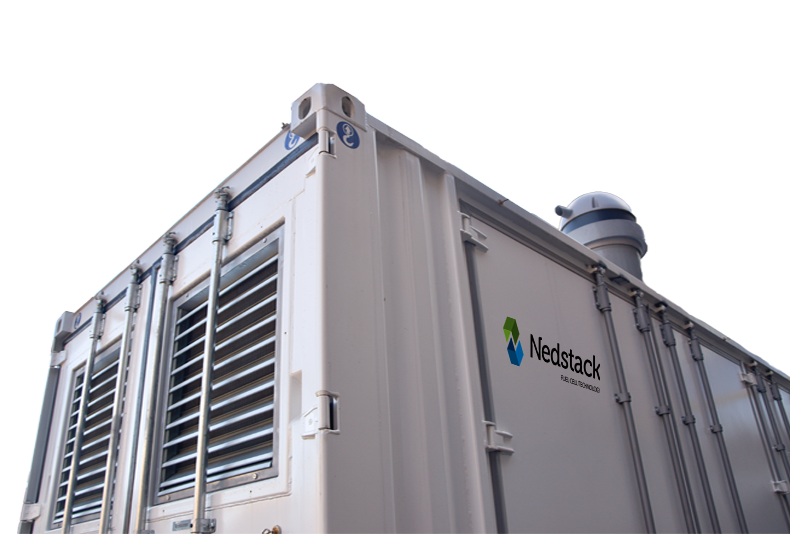
Nedstack has been building LT-PEM fuel cell systems in Arnhem since 1999. Our systems have logged more than 70,000 running hours on a single installation, and over 20 MW of fuel cell stacks have been deployed in more than 20 countries. The current generation delivers 1 MW peak and 900 kW prime power from one containerised unit.
The transition is possible. What makes it work is investing on time: the projects that start now, in ports, data centres and at sites without a reliable grid connection, build the experience that a large-scale rollout needs, towards a sustainable and independent energy system. Performance depends on hydrogen quality and operating conditions, so we confirm both with you before we commit to a number.
Want to know what fuel cells can do for your application? Get in touch.

Contact us today, and your hydrogen project begins.