Client
Lenten Scheepvaart
Date
May 2023
Services
Fuel-cell system supply & integration
Salt from Delfzijl has to reach the chemical plants in the Rotterdam Botlek, week after week. Up to 3,850 tonnes per voyage, the equivalent of 120 trucks.
The salt producer also produces hydrogen, as a by-product of chlor-alkali electrolysis. The question behind the Antonie was simple: can the ship that carries the salt run on the hydrogen that comes out of it?
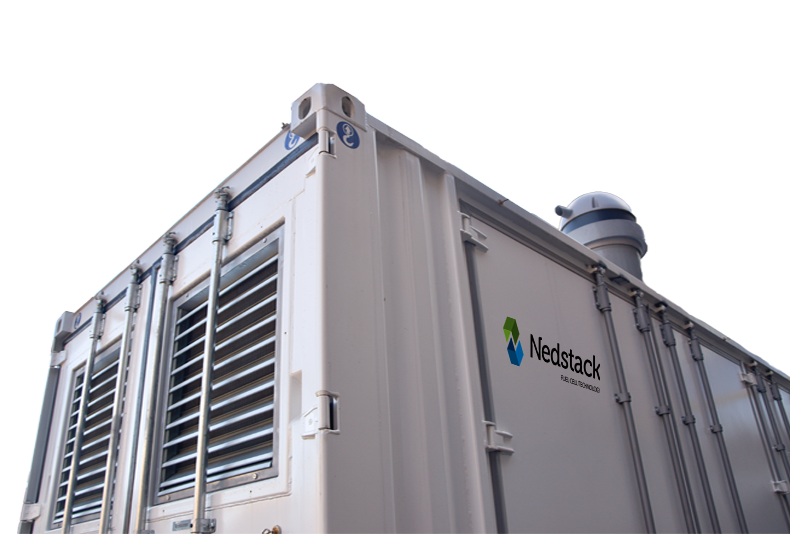
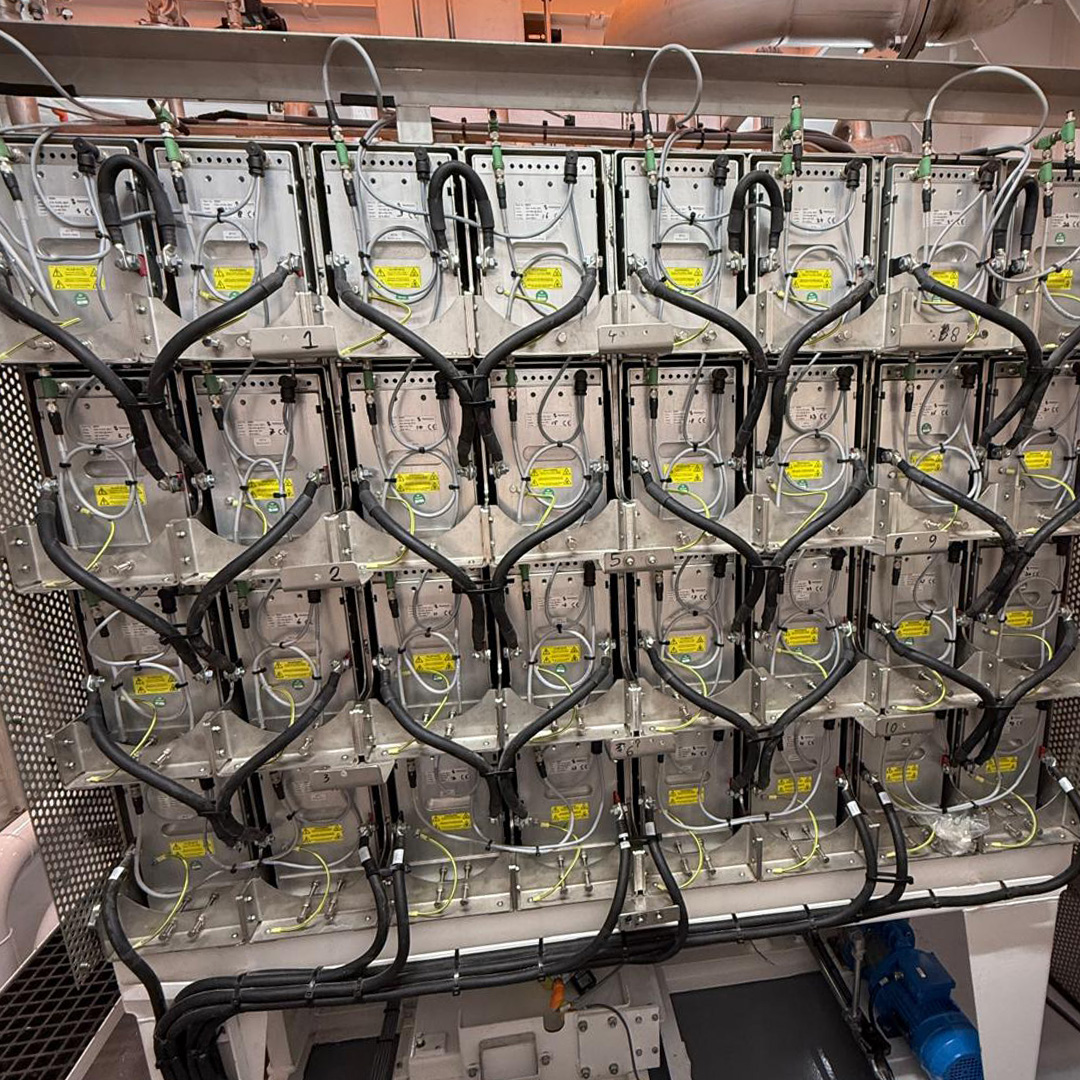
Nedstack supplied and integrated the fuel cell power plant.
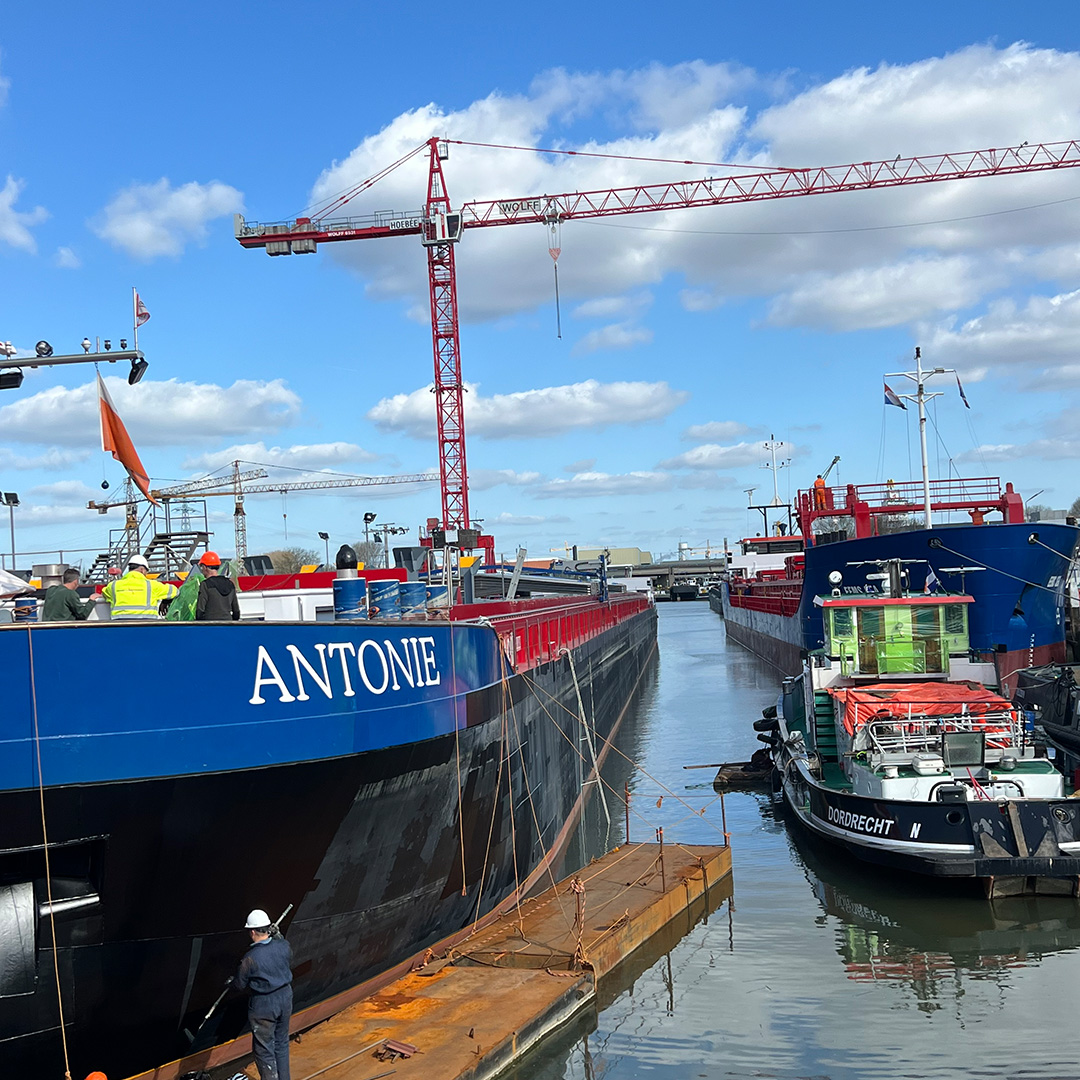
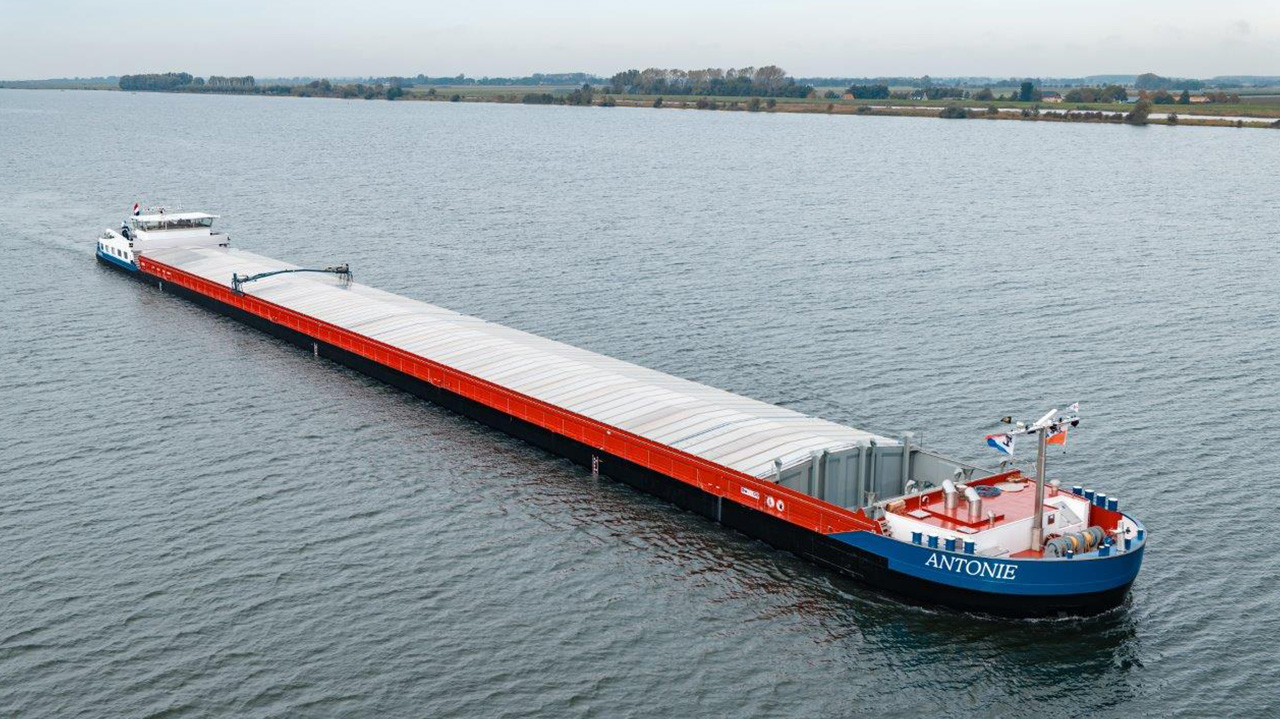
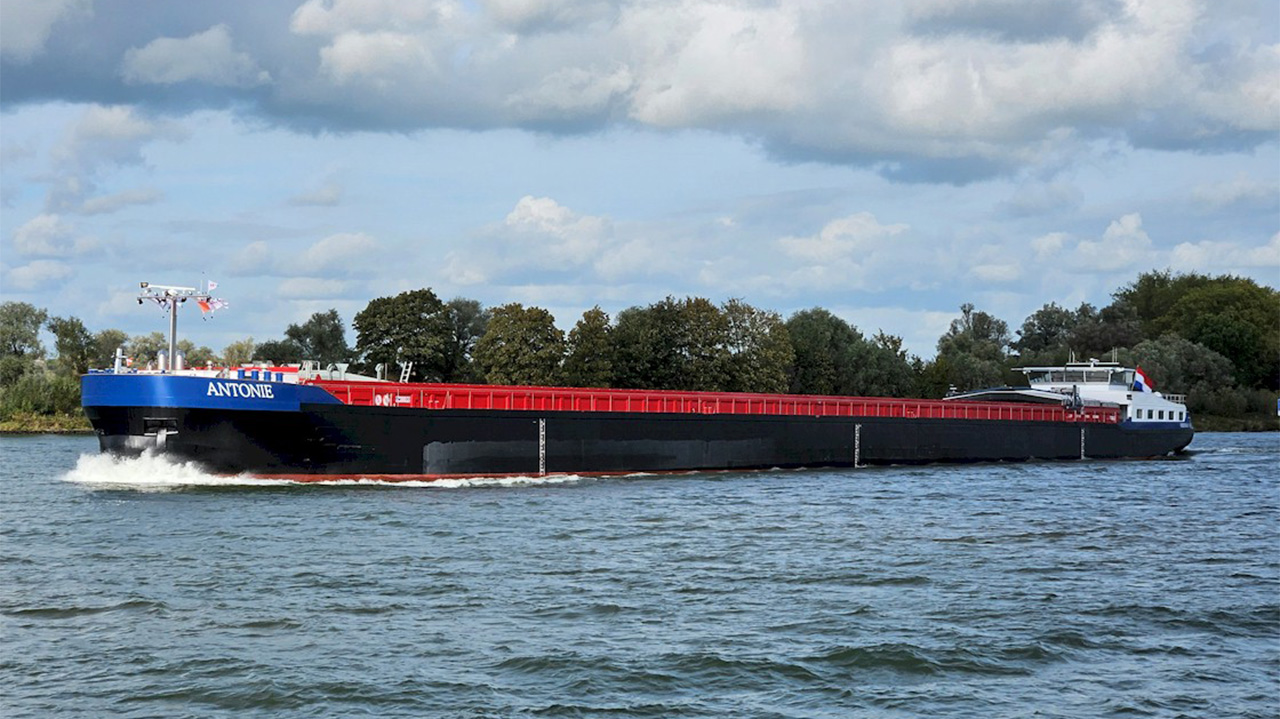
The Antonie was a 135-metre newbuild for heavy bulk cargo, on a fixed route under a 10-year transport contract with Nobian. The hydrogen system had to work around a commercial cargo operation, not the other way round.
There was no standard design to copy. Hull, energy system, storage and logistics had to be engineered together, by a consortium of shipowner, yard, fuel supplier, storage maker and fuel cell supplier.
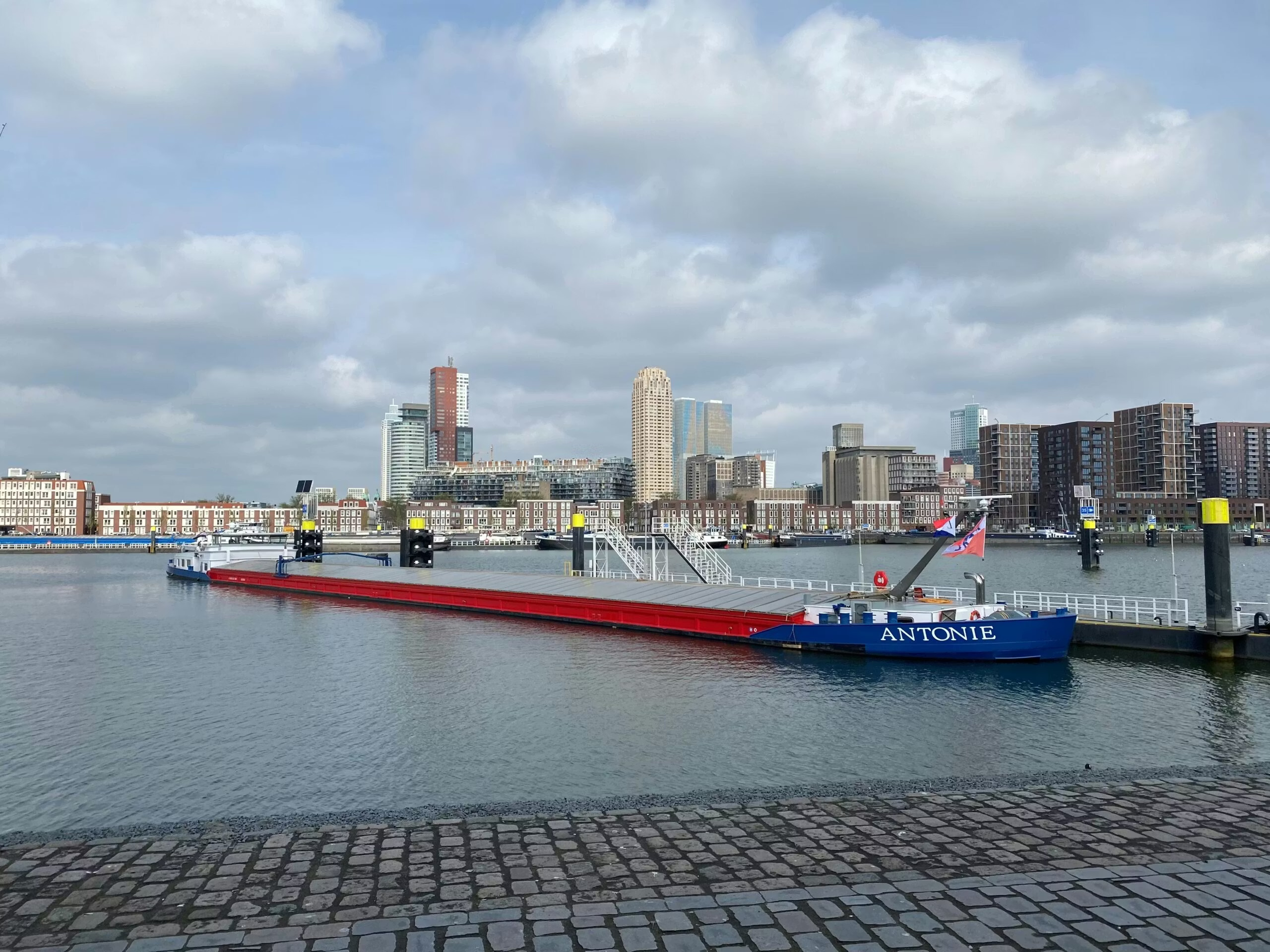
The ship was laid out around the hydrogen. Storage, fuel cells and batteries sit in the forward section; the crew accommodation is aft. Hydrogen installation and crew are kept as far apart as the hull allows.
The hydrogen comes from the same salt chain the ship serves. It is carried at 300 bar in swappable containers: three per trip, exchanged in Rotterdam, so bunkering becomes a container move rather than a fuelling stop.
The fuel cell supplies both propulsion and hotel loads. A 1,089 kWh battery shaves the peaks and stores the energy from regenerative braking.
The ship was delivered in 2023 and completed its sea trial on test hydrogen cylinders and battery power. Delays in building the hydrogen storage containers have pushed back full hydrogen operation; operating data will be added here once the Antonie sails on hydrogen.
The Antonie showed that a full-size inland bulk carrier can be designed and built around a hydrogen fuel cell, with the fuel supply tied to the cargo it carries. It also showed where the hard part sits today: not in the fuel cell, but in the storage containers and the logistics around them.
It continues a line that started with by-product hydrogen. Nedstack's Delfzijl plant ran for 15 years on hydrogen from chlor-alkali production. The Antonie takes the same idea onto the water, on the route between that salt and its customers.
That is still the standard we design to: power that keeps going, because the cargo behind it can't stop.
Built to a 135-meter newbuild design, Antonie transports bulk salt between Delfzijl and Rotterdam without combustion engines. The vessel’s energy heart pairs containerized hydrogen storage with a Nedstack fuel-cell power plant and a lithium-ion battery pack for peak shaving. The result: dependable zero-emission voyages on one of Europe’s busiest inland corridors.
Operational reliability drove every decision. Class-supervised integration ensures safe ventilation, gas detection, and power isolation zones. The Nedstack PEM fuel cell provides continuous electric power for propulsion and hotel loads, while the battery handles transients and regenerative braking from the propulsors. Hydrogen is supplied in certified, swappable tank containers (300-bar), enabling quick turnarounds and scalable range without redesigning the hull. Shore power and digital monitoring reduce port emissions and simplify maintenance planning. Compared with a diesel baseline, Antonie removes CO₂, NOₓ, SOₓ and particulates from the route while cutting noise for crews and riverside communities.
Antonie shows that zero-emission doesn’t mean experimental, it means operational.
The energy architecture is modular and predictable: hydrogen containers set the baseline, the Nedstack fuel cell delivers steady, efficient power, and the battery smooths demand peaks and maneuvers. An energy management system coordinates flows, maintains redundancy, and logs performance for continuous improvement. This straightforward logic makes training simple, bunkering fast, and replication across sister ships practical, turning a flagship into a template for clean inland shipping.
Contact us today, and your hydrogen project begins.