Client
Koedood marine group
Date
March 2023
Services
Fuel-cell supply, maritime integration support
The fastest way to get hydrogen onto the water is to convert ships that are already sailing. At the time, nobody had done it: Holland Shipyards described retrofitting a conventional vessel to hydrogen as a first.
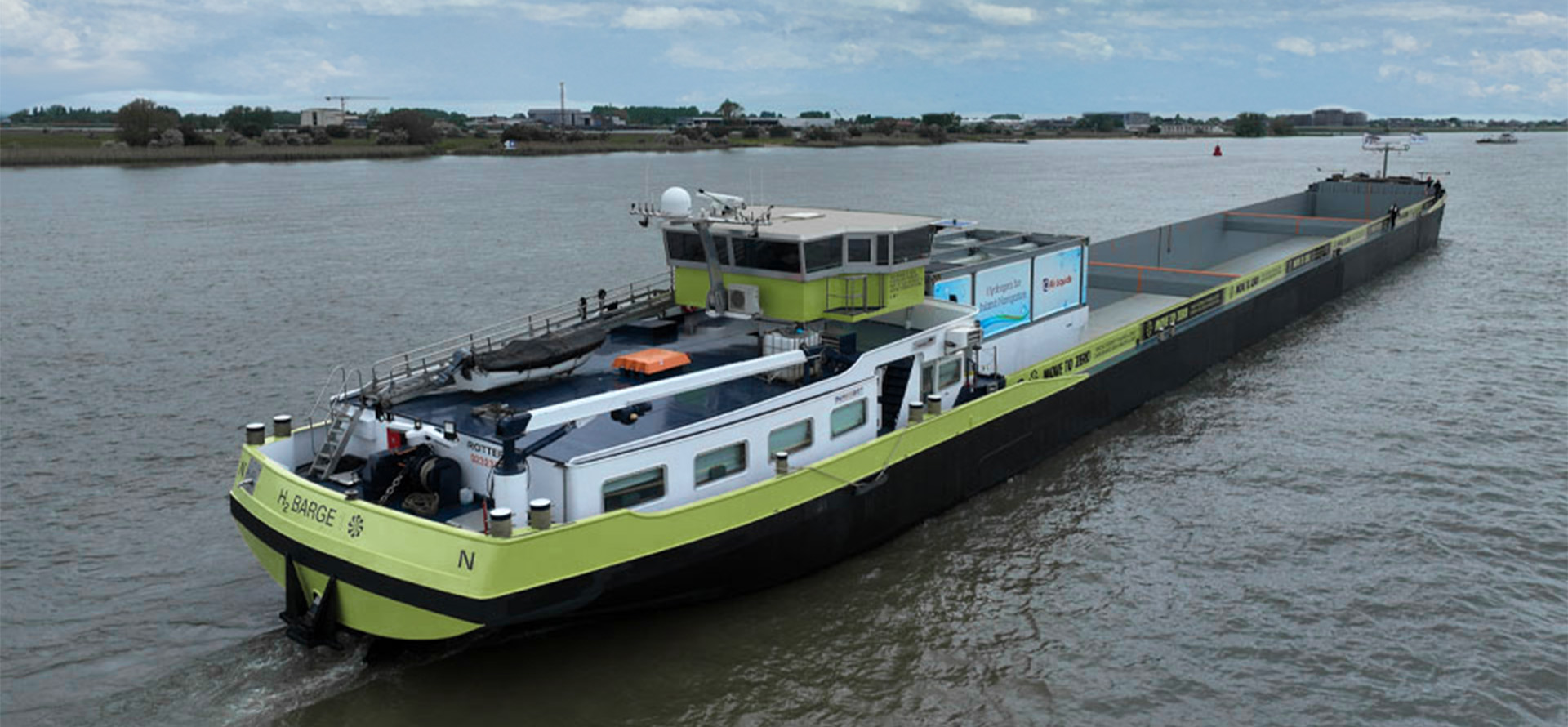
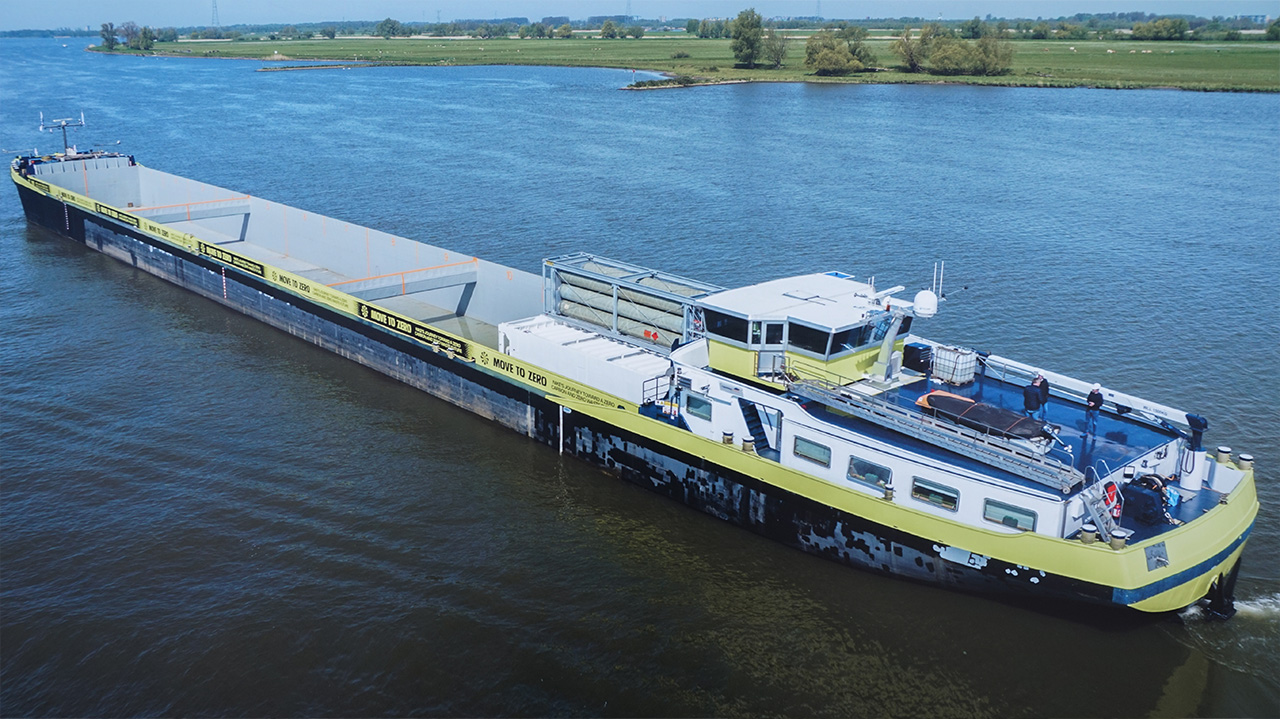
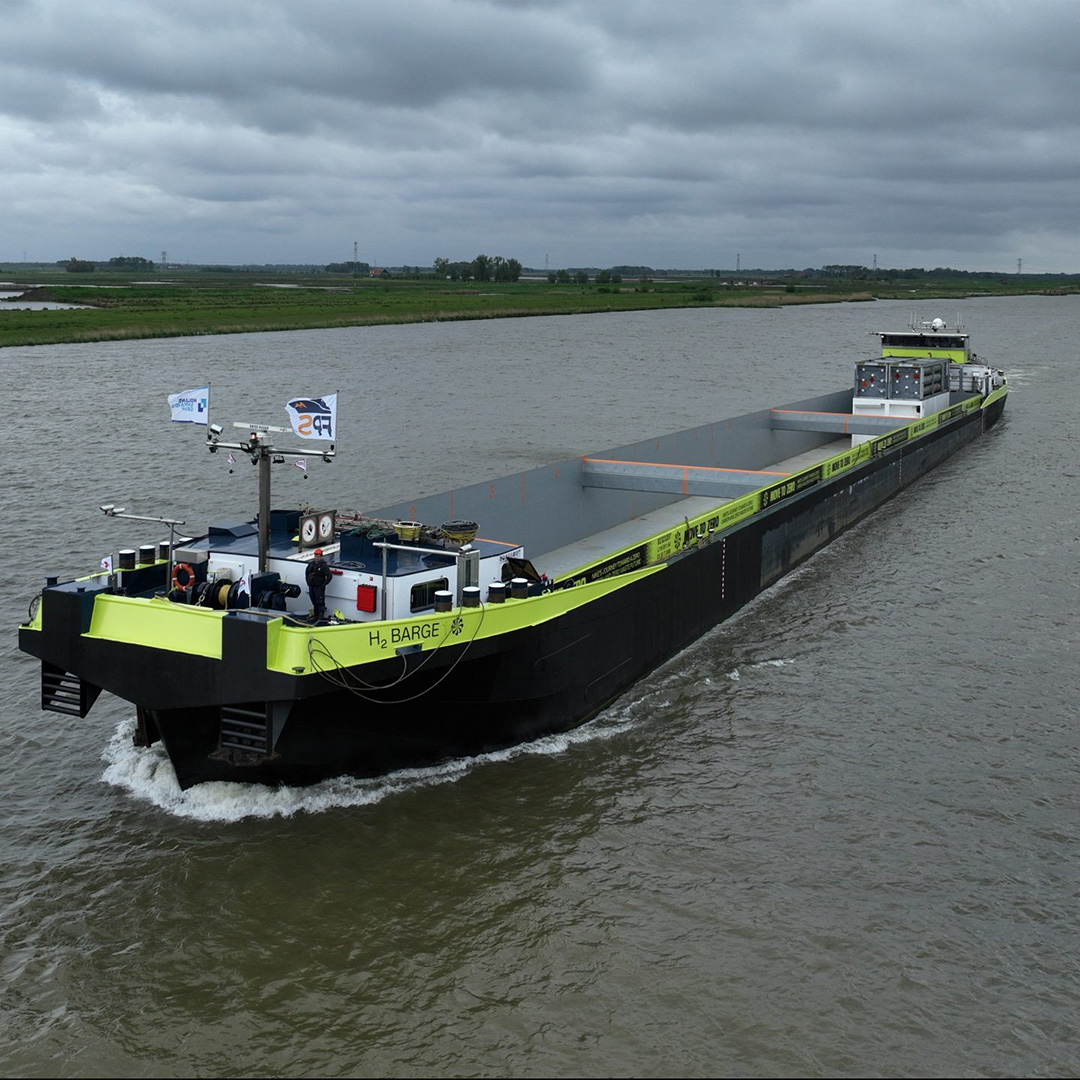
H2 Barge 1 answered that question with a working container ship. A conventional inland vessel went into the yard in 2022 and came out in May 2023 running on three Nedstack fuel cell modules.
It then went straight into commercial service.
A retrofit has to fit hydrogen into a hull that was never designed for it. The diesel drivetrain had to come out, and fuel cells, switchboards, batteries and hydrogen storage had to go in, while keeping it a working container ship.
There was also no rulebook. Lloyd's Register classed the conversion with a risk-based approach, because no comprehensive framework of rules for this existed yet.

The fuel cells went into three areas in the cargo hold; switchboards and batteries went into the former engine room and bow thruster room. The price was cargo space: capacity dropped from 208 to 192 TEU, about 8%.
Instead of bunkering, the ship swaps its hydrogen. Two 40-ft containers at 300 bar are exchanged at the terminal, which keeps turnaround short and gives around 19 hours of sailing per set.
With no complete rule framework for hydrogen retrofits, the conversion was assessed on risk with Lloyd's Register, and the fuel cell safety systems had to be class-compliant.
H2 Barge 1 entered commercial service in May 2023 on a seven-year charter. An independent review by the Interreg REDII Ports project in 2026 recorded:
The review's conclusion was clear: hydrogen fuel cell propulsion is technically viable for inland container shipping, especially on routes beyond what batteries can cover. The remaining barrier is the price of green hydrogen, not the propulsion system.
H2 Barge 1 went into service in the same year as the Antonie, a newbuild designed around hydrogen. Between them they showed both routes onto the water: build new, or convert what is already sailing.
That is still the standard we design to: power that keeps going, because the cargo behind it can't stop.
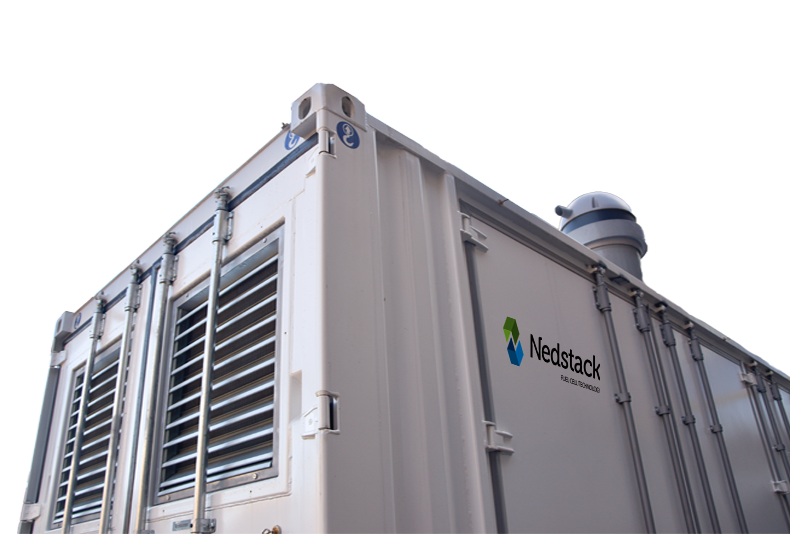
Converted from a conventional diesel vessel, H2 Barge 1 demonstrates that deep cuts in emissions are possible without sacrificing uptime. Its energy core uses three Nedstack PemGen modules (≈825 kW total) with a lithium-ion battery (≈504 kWh) for peak shaving, delivering smooth electric propulsion and reliable hotel power.
Hydrogen arrives in two 40-ft containerized storage units that are be swapped at the terminal to minimize turnaround time. For shippers, the benefits are immediate: zero CO₂/NOₓ/SOₓ/PM along the route, markedly lower noise, and a scalable fuelling model that fits existing terminals. For modular hardware and class-compliant safety systems simplify maintenance and pave the way for fleet replication across similar hulls.
From retrofit to revenue service, H2 Barge 1 proves hydrogen works for real-world container logistics.
The architecture is modular and relaiable. Containerized hydrogen sets the baseline, the Nedstack fuel cells provide steady, efficient power, and the battery handles transients, berthing and peak loads. Standardized swap-and-go fuelling, remote diagnostics and clear operating envelopes keep crews focused on schedule and cargo turning a flagship pilot into a repeatable model for clean inland shipping.

Contact us today, and your hydrogen project begins.