Client
Ynnovate Chemicals
Date
October 2016
Services
Fuel-cell stack supply, system engineering support, integration
A chlor-alkali plant makes chlorine and caustic soda, and hydrogen comes out as a by-product. If nobody uses it, it is vented.
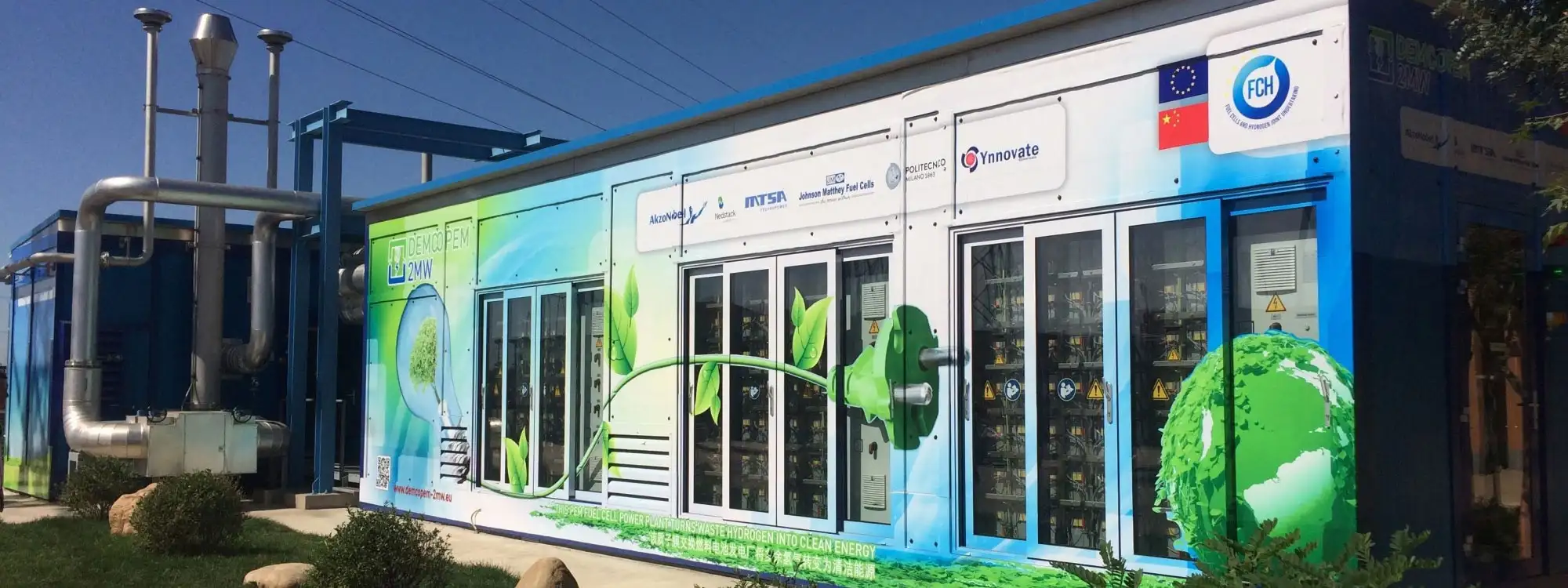
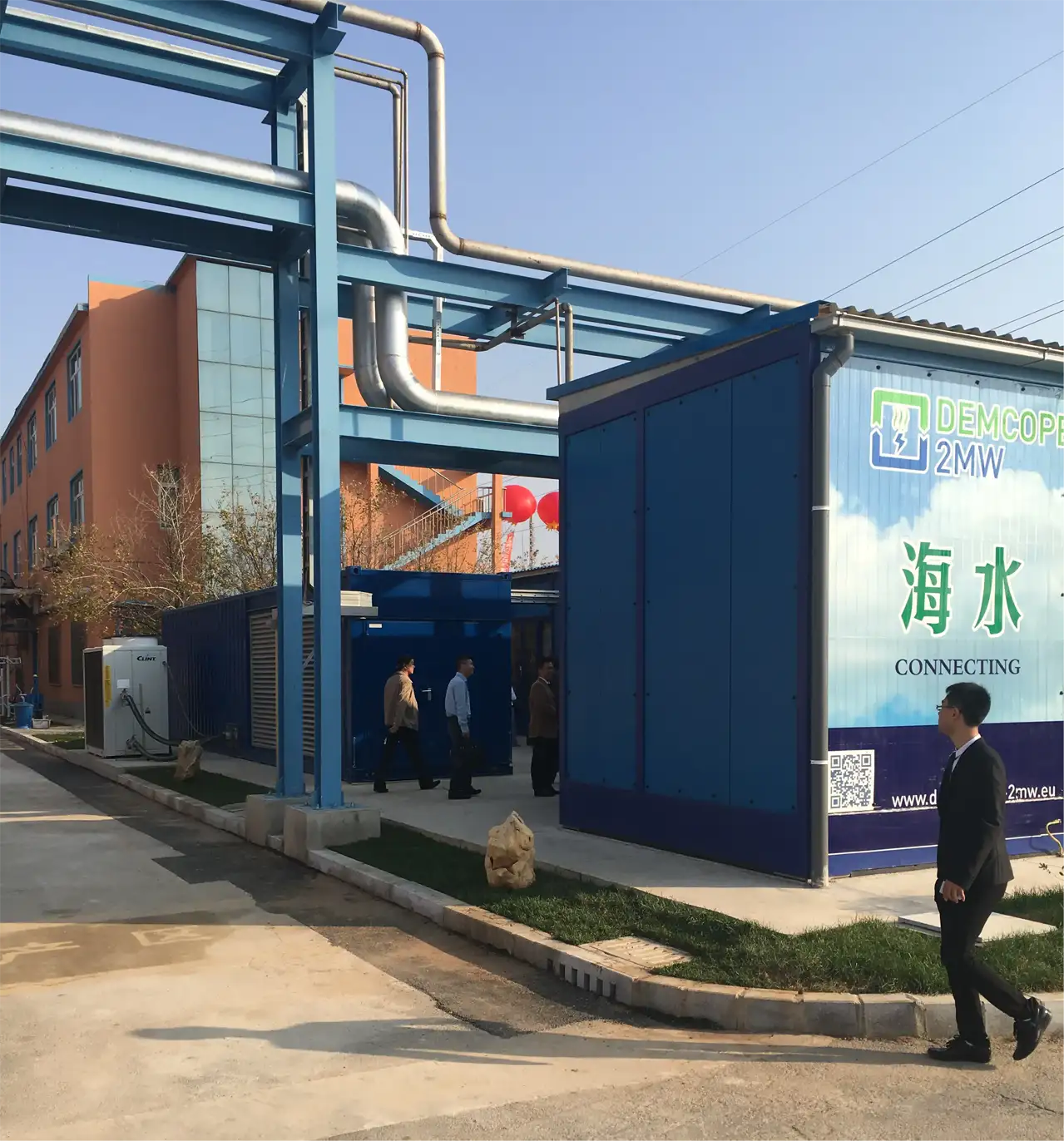
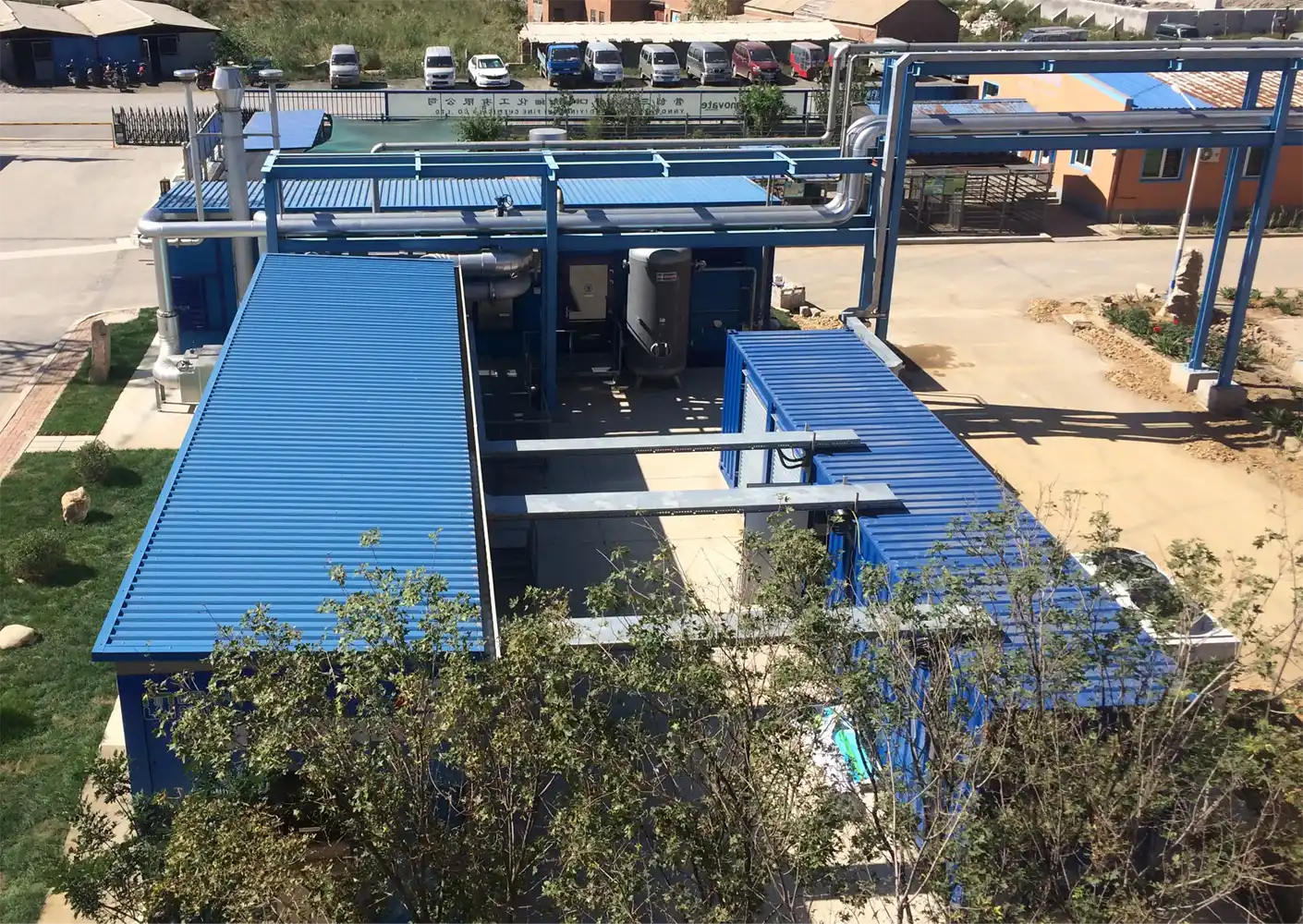
At Ynnovate Sanzheng Fine Chemicals in Yingkou, China, that hydrogen became the plant's own power station. In October 2016 a 2 MW Nedstack PEM fuel cell plant started turning it back into electricity and heat for the site.
The largest PEM power plant in the world at the time.
Chlor-alkali electrolysis is power-hungry; the hydrogen it produces holds almost 45% of the energy the plant consumes. Recovering that energy at scale needed a fuel cell plant twice the size of Lillo, running unattended next to a chemical process.
The EU-funded DEMCOPEM-2MW project set the targets: 2 MW of electricity, more than 50% electrical efficiency, combined heat and power, and fully automated remote operation on the other side of the world.
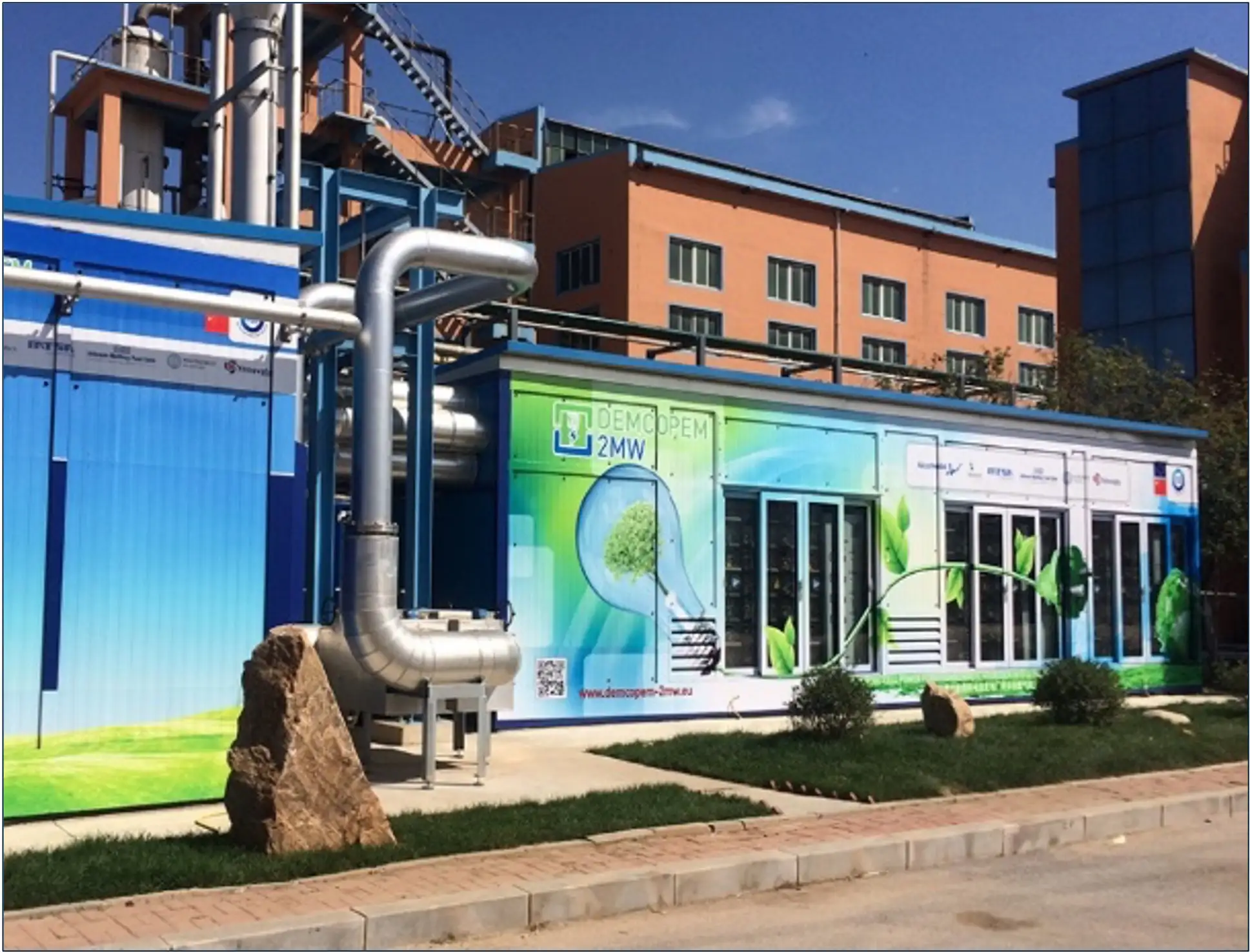
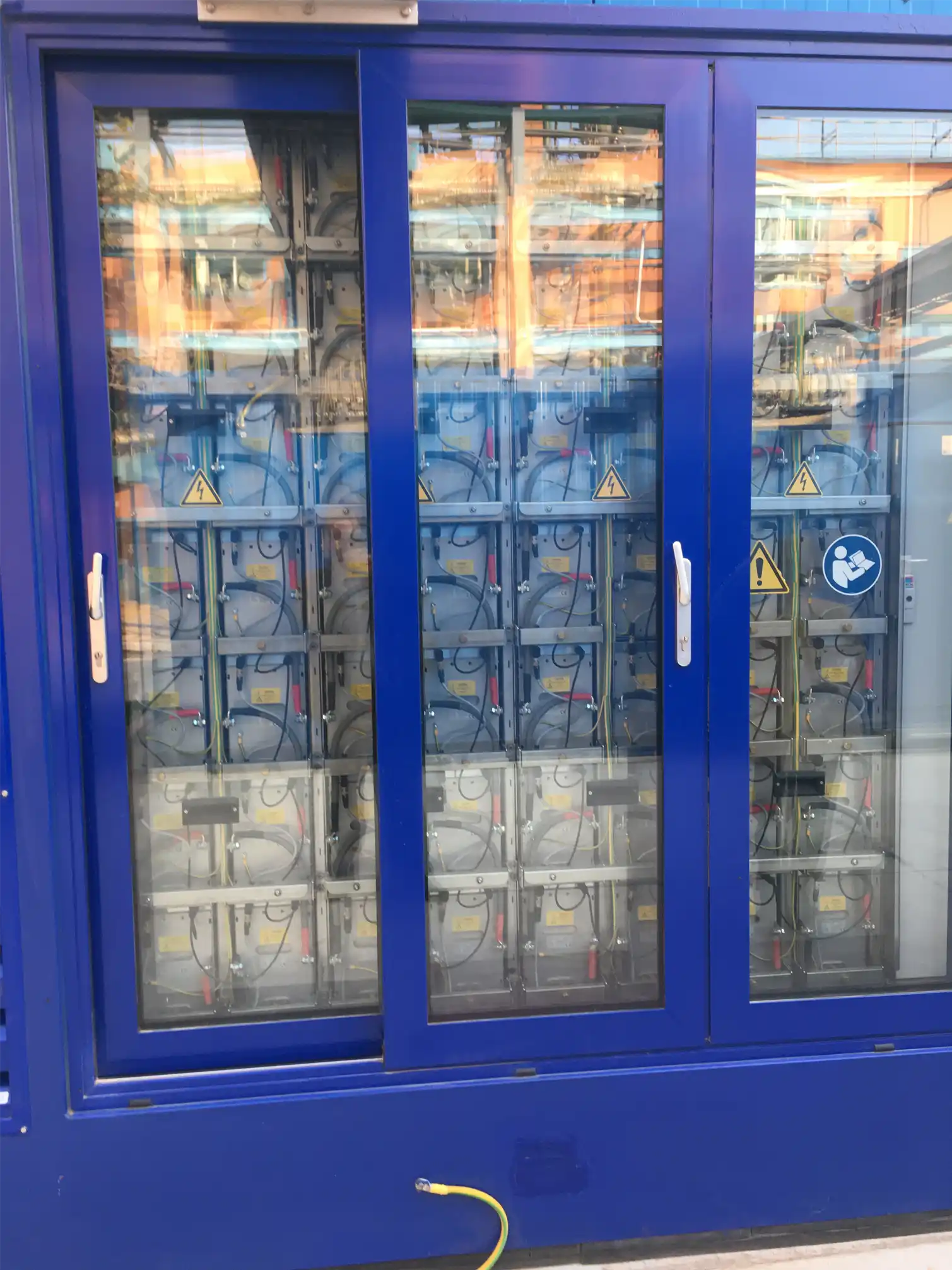
After Lillo's 1 MW in 2011, Yingkou doubled the output to 2 MW. MTSA designed the plant for fully automated remote operation, so a chemical site in Liaoning could run it without a fuel cell team on site.
Electricity alone reached 50% efficiency at system level. Recovering the heat added roughly 25 to 30 percentage points, bringing combined efficiency to 80%.
Industrial hydrogen is not lab hydrogen. Stacks in Yingkou lost performance faster than expected, while identical stacks, including stacks returned from China, ran normally at Delfzijl. The cause pointed to contamination in the hydrogen and air feeds, and an H2 scrubber was installed. Feed-stream quality became a design input in its own right.
Results over more than two years of operation, from the project's final report:
[ Code embed: Results table ]
Yingkou showed that by-product hydrogen can run a multi-megawatt PEM plant as part of a chemical process, with availability above 95% and 20% less electricity drawn by the site. It also showed that at this scale, fuel and air quality matter as much as the stack itself.
It was the next step in one line of work. Delfzijl proved endurance on by-product hydrogen from 2007, Lillo took it to 1 MW in 2011, and Yingkou took it to 2 MW in 2016, with Delfzijl serving as the reference site for stacks returned from China.
That is still the standard we design to: power that keeps going, because the process behind it can't stop.
Contact us today, and your hydrogen project begins.