Client
Solvay / SolVin
Date
Services
1 MW PEM power plant supply, engineering & system integration
Every chlor-alkali plant makes hydrogen, whether it wants to or not. It leaves the electrolysis cells alongside the chlorine, a steady stream that is part of the process itself. For decades, most of the industry treated it as a side stream.
In 2010, Solvay asked a different question: what if that hydrogen powered the plant it came from?
SolVin’s site in Lillo, near Antwerp, is a joint venture of Solvay (75%) and BASF (25%) and one of Europe’s major vinyls producers. Its chlorine production consumes large amounts of electricity and produces hydrogen as a by-product.
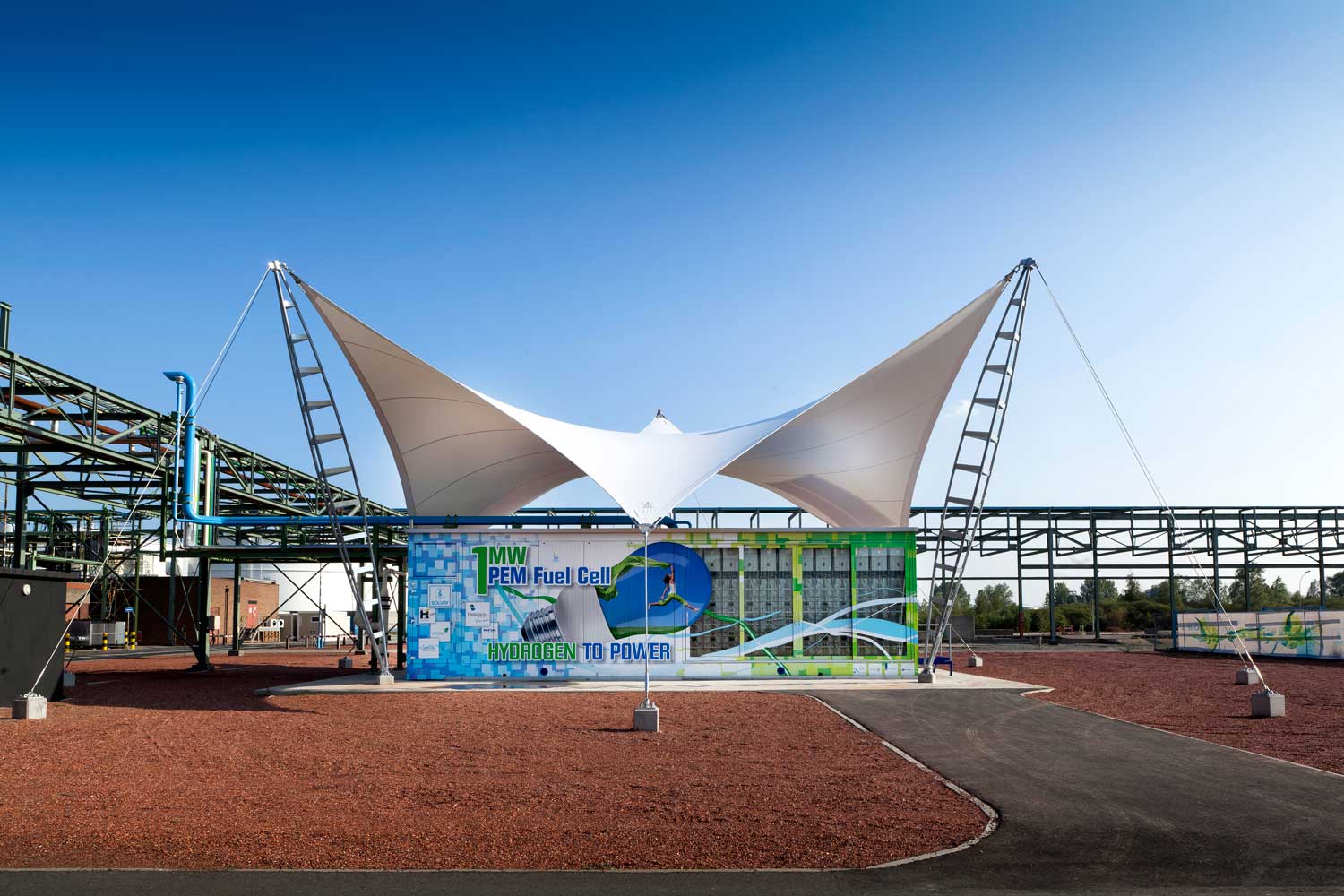
The goal was to close that loop. Convert the hydrogen on site into electricity and heat, feed both back into production, and do it at a scale that would matter to an industrial operator: one megawatt.
At that point, no PEM power plant of this kind had been built at that size.
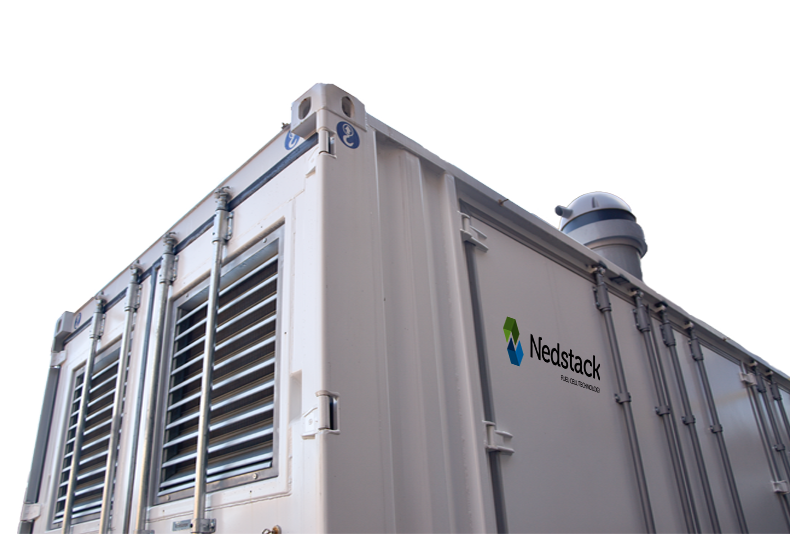
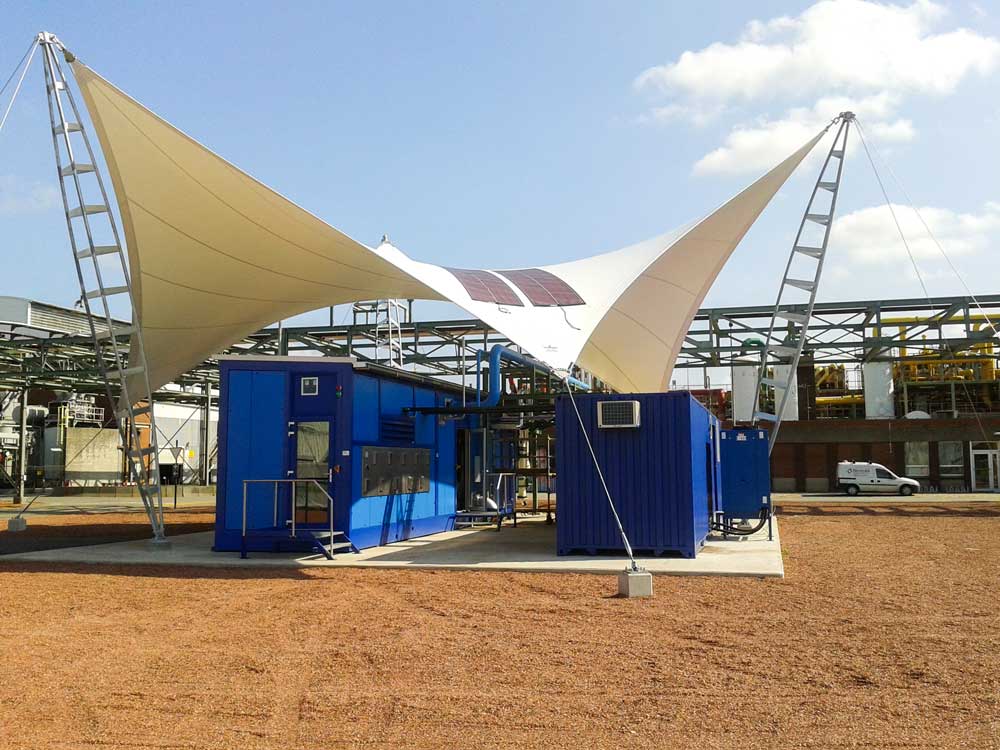
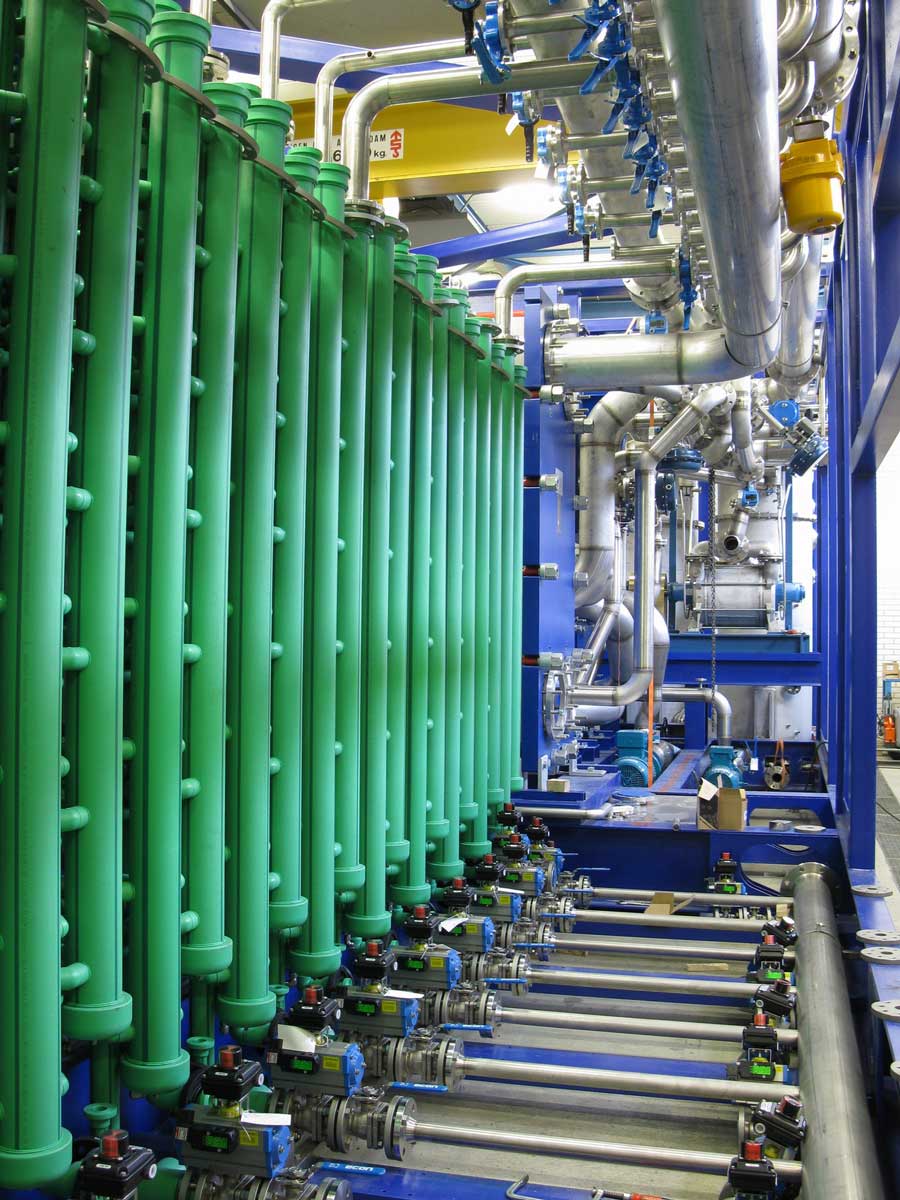
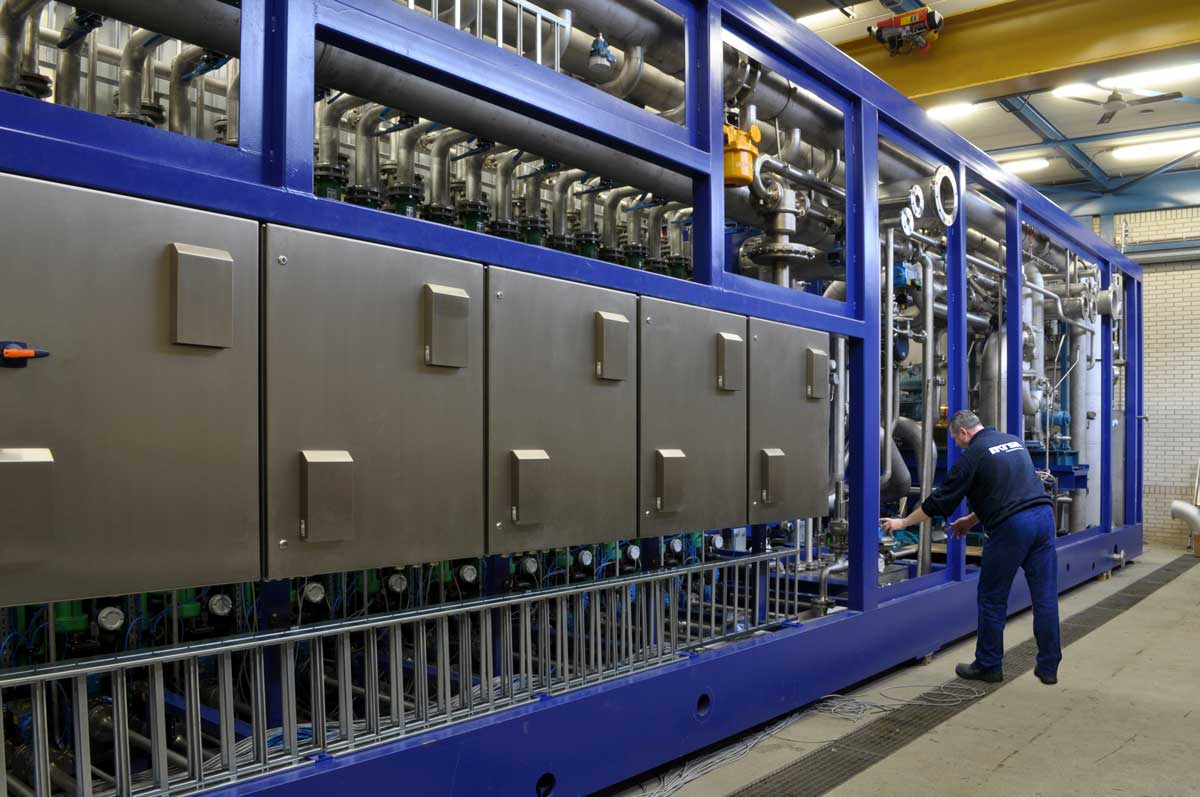
Nedstack designed a 1 MW PEM power plant built around its own stack technology. The mechanical build was done by MTSA Technopower in Arnhem. The membrane electrode assemblies came from SolviCore, the Solvay–Umicore joint venture, so the project also tested Solvay’s own membrane materials at industrial scale.
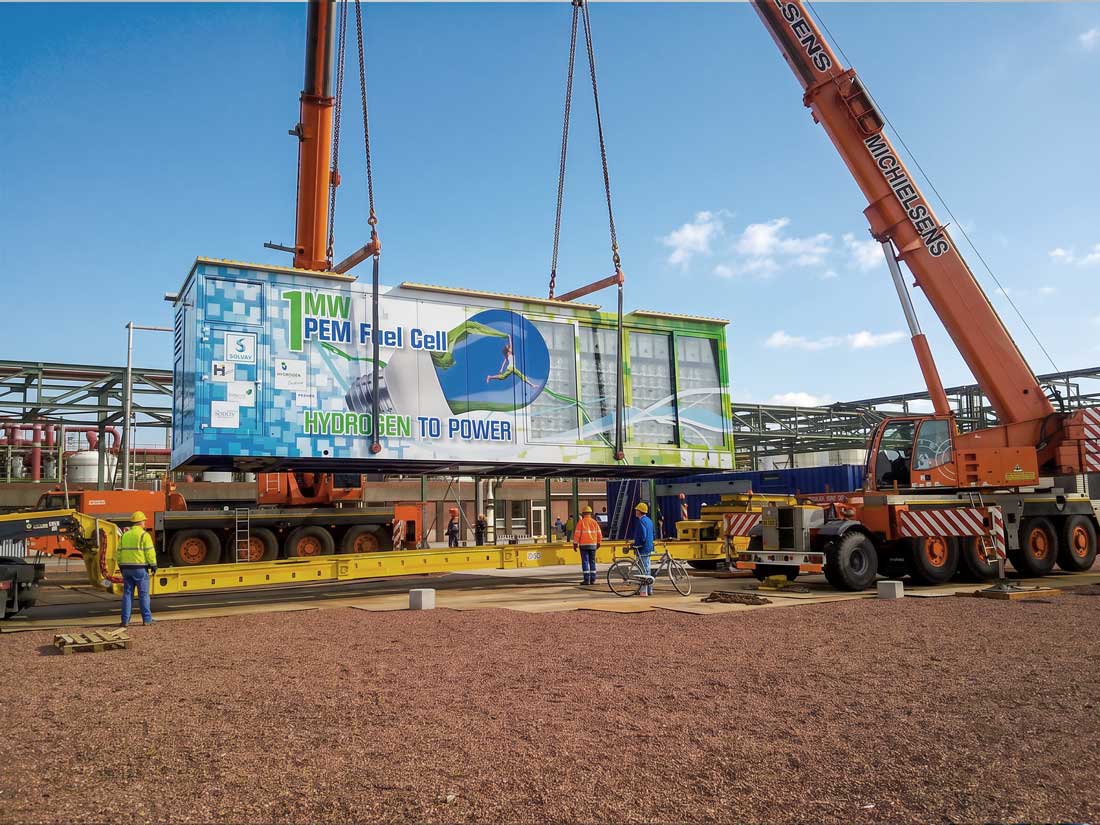
On 27 July 2011, the plant left Arnhem on a low loader and was driven to Antwerp.
The project was part of Hydrogen Region Flanders–South Netherlands, coordinated by WaterstofNet and supported by the EU Interreg programme, the Flemish and Dutch governments and industry partners.
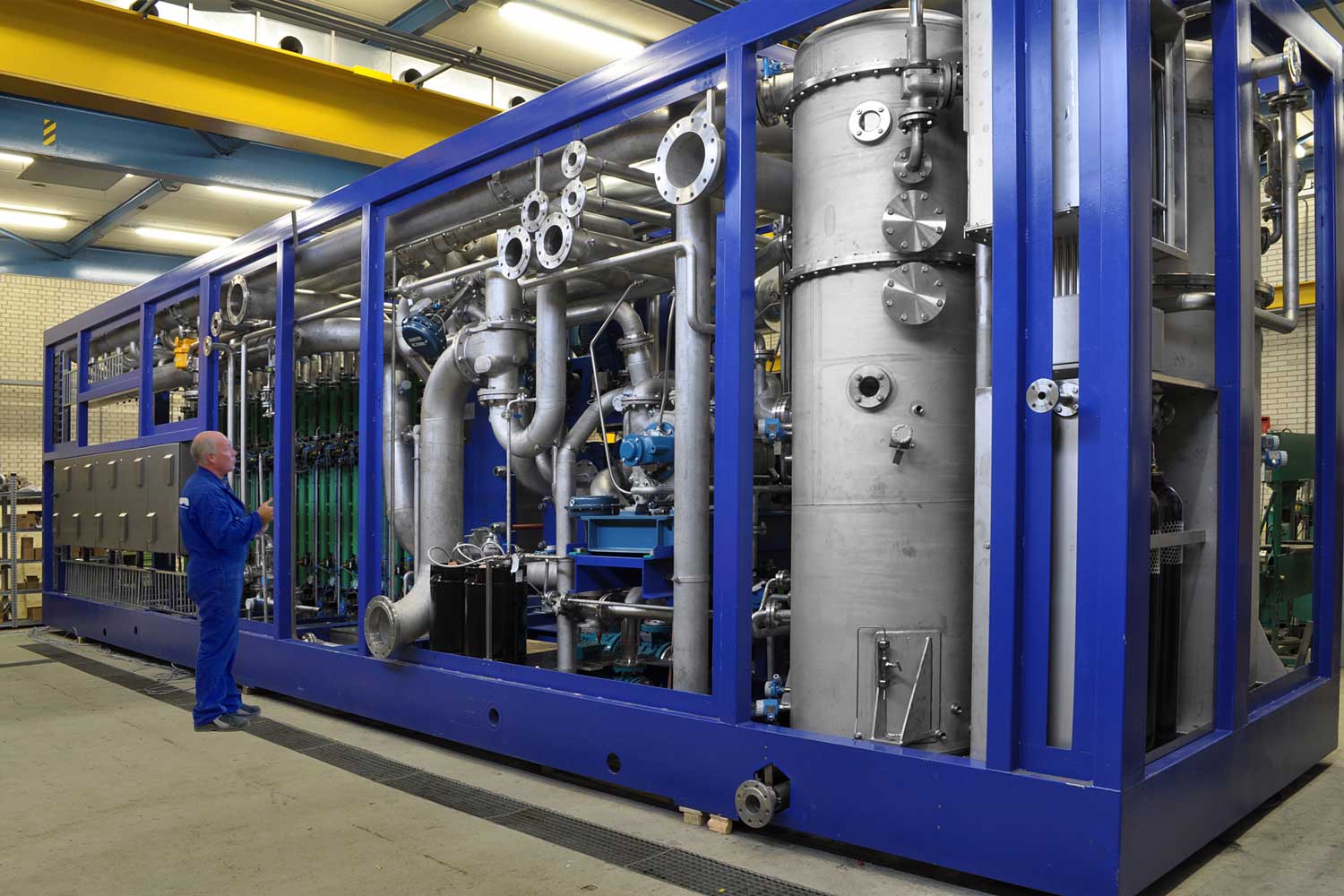
The stacks were the part we knew best. The real work was making a megawatt of fuel cells behave as part of an operating chemical site.
Industrial by-product hydrogen is not cylinder gas from a lab. The plant had to run on the hydrogen the site actually delivered, continuously, as part of a production process that doesn’t pause for its power supply.
The power plant sits on a site that handles chlorine. Before commissioning, Nedstack carried out a full HAZOP study together with Solvay and MTSA. Hydrogen safety was treated as an engineering deliverable from the first design drawing.
Not all of the plant ran at steady state. A section of up to 250 kW was set aside for dynamic testing, with fast ramps in demand like those a city bus or distribution truck would place on a fuel cell. That data fed directly into improving stack lifetime and cost.
In those first ~800 hours, the plant produced as much electricity as roughly 1,370 households would use over the same period.
Lillo was the scale-up of a 70 kW plant Nedstack had installed at AkzoNobel’s chlor-alkali site in Delfzijl in 2007. Going from 70 kW to 1 MW answered the question that mattered most to industry: does PEM hold up at megawatt scale, inside a real plant, on real-world hydrogen?
It did. The plant ran on site hydrogen, inside a working chemical plant, at 99% availability.
That is still the standard we design to: power that keeps going, because the operation behind it can’t stop.
Contact us today, and your hydrogen project begins.