Client
AkzoNobel
Date
Services
PEM fuel cell power plant, system engineering & integration
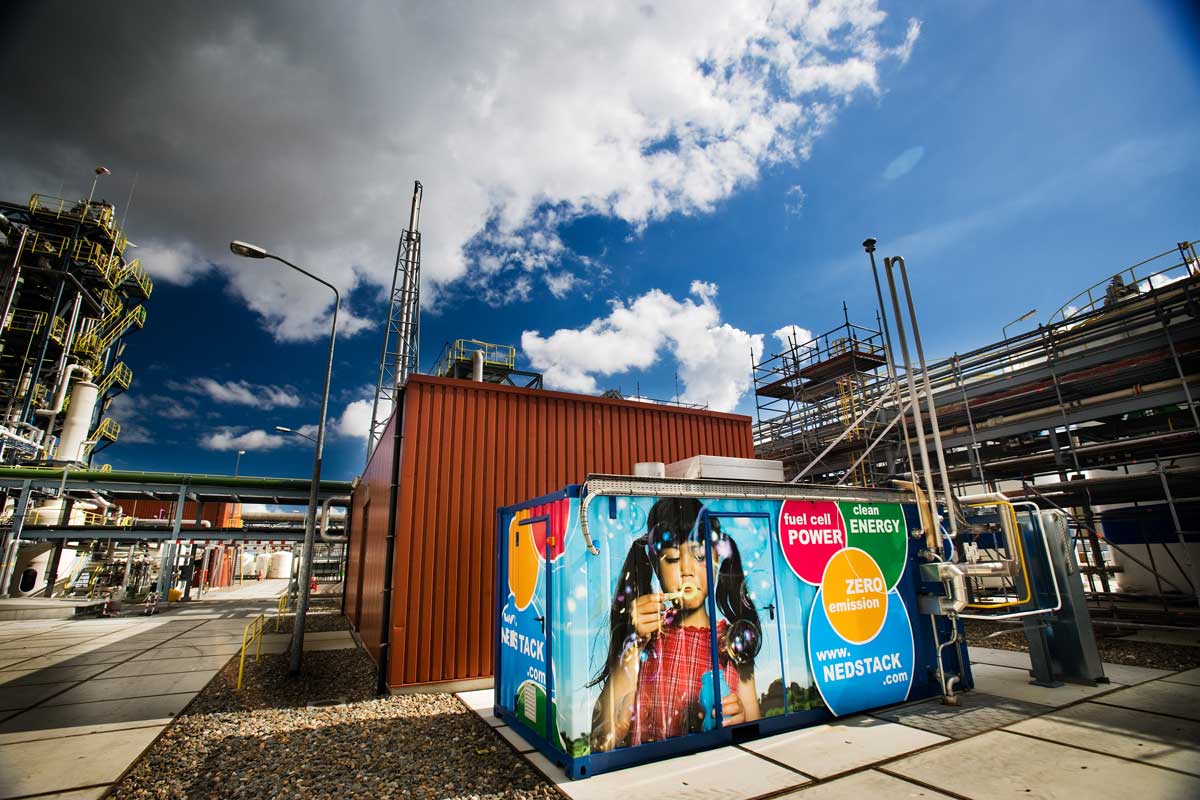
In 2007, a 70 kW fuel cell unit was connected to the grid at AkzoNobel’s chlorine plant in Delfzijl. It was built as a pilot. It ran until 2022 and logged more than 70,000 running hours.
A chlor-alkali plant produces hydrogen as part of its process. In Delfzijl, it comes out of the membrane electrolysis cells alongside the chlorine. AkzoNobel and Nedstack wanted to know two things: can PEM fuel cells turn that hydrogen back into power for the same plant, and can they keep doing it, year after year, inside a working chemical site?
In 2007, the second question had no answer. PEM fuel cells were widely seen as a new technology whose stationary lifetime had not yet been shown in practice. The only way to find out was to build a plant and keep it running.
Nedstack itself was founded as a joint initiative of AkzoNobel and ECN, so the chlorine plant was familiar ground.
By-product hydrogen from a chlorine plant is not lab-grade gas. Over the years, the plant became a reference for how feed contaminants affect PEM cells over tens of thousands of hours. That knowledge went straight into Nedstack’s stack design.
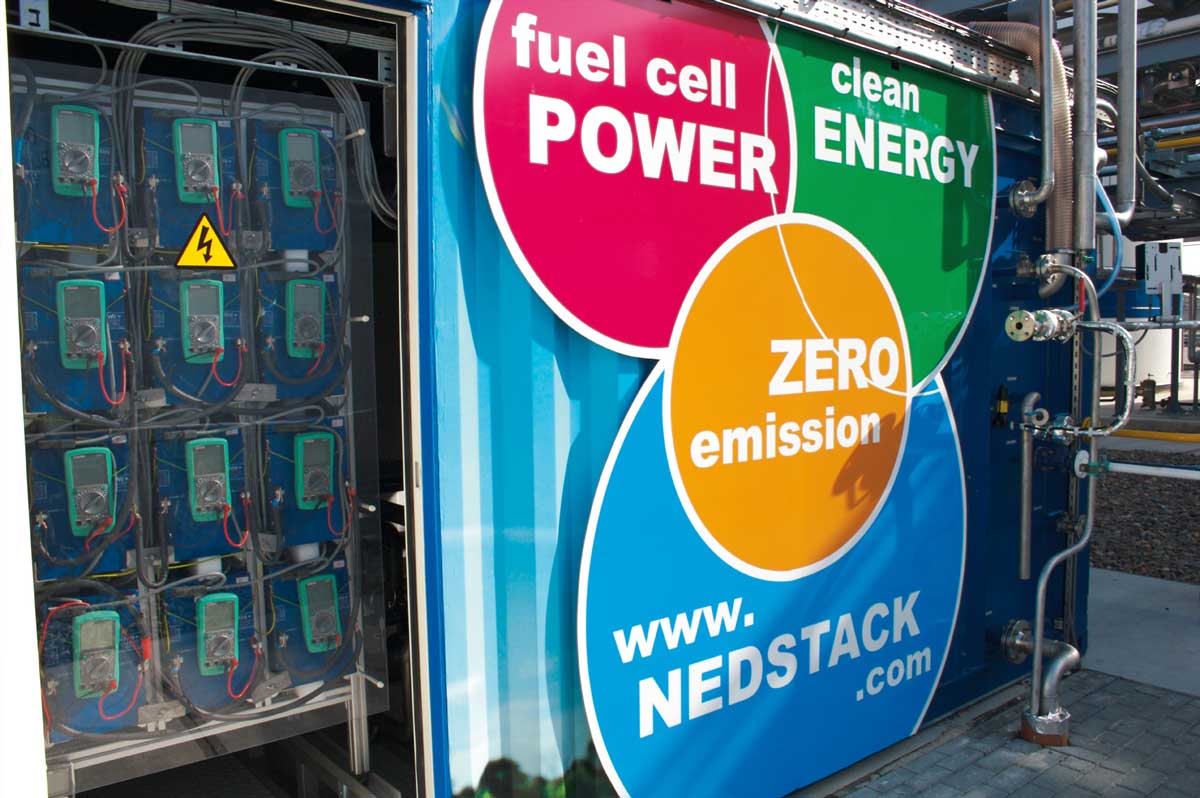
The plant was designed to run with minimal maintenance and was monitored at a distance by Nedstack. By January 2014, it had passed 40,000 hours without replacing any of the main system components.
Because every stack could be monitored individually, Delfzijl also served as a long-duration test environment for new stack generations. Nedstack’s XXL stacks ran for over 23,000 hours in the plant, and measured voltage decay dropped below 2 mV per 1,000 hours.
Delfzijl answered the question the industry kept asking about PEM fuel cells: how long do they really last? The answer was 15 years on one plant, on industrial by-product hydrogen, inside a safety-critical chemical site.
It also laid the groundwork for what came next. In 2011, the lessons from Delfzijl were scaled up to a 1 MW plant at Solvay in Antwerp.
That is still the standard we design to: power that keeps going, because the operation behind it can’t stop.


Contact us today, and your hydrogen project begins.