Client
Fincantieri
Date
July 2020
Services
Fuel-cell supply, maritime integration support
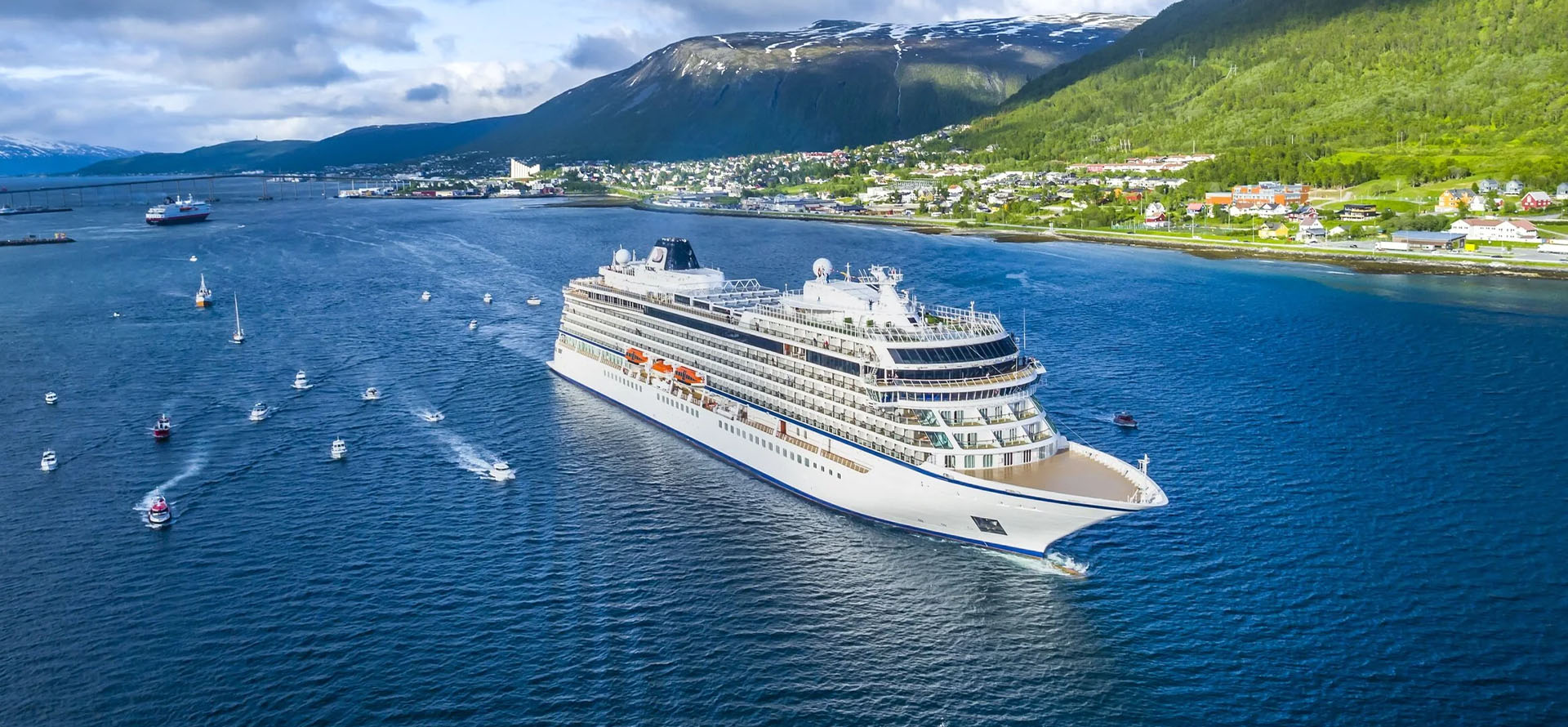
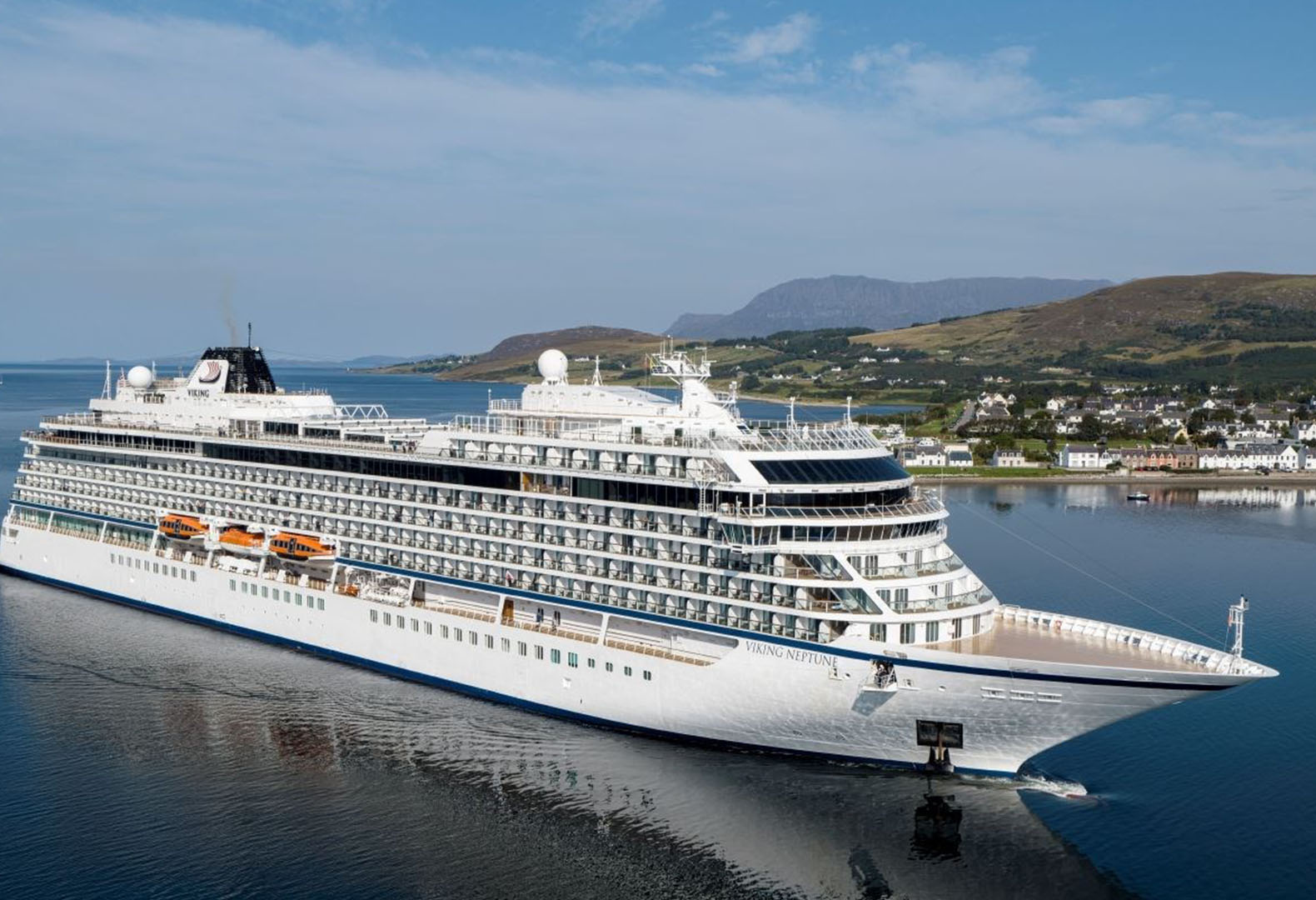
A cruise ship is a small town at sea: 930 guests, 1,443 people on board at most, and 23,520 kW of installed diesel-electric power. Every new energy source on board has to pass the same test as a hotel and a power plant at once.
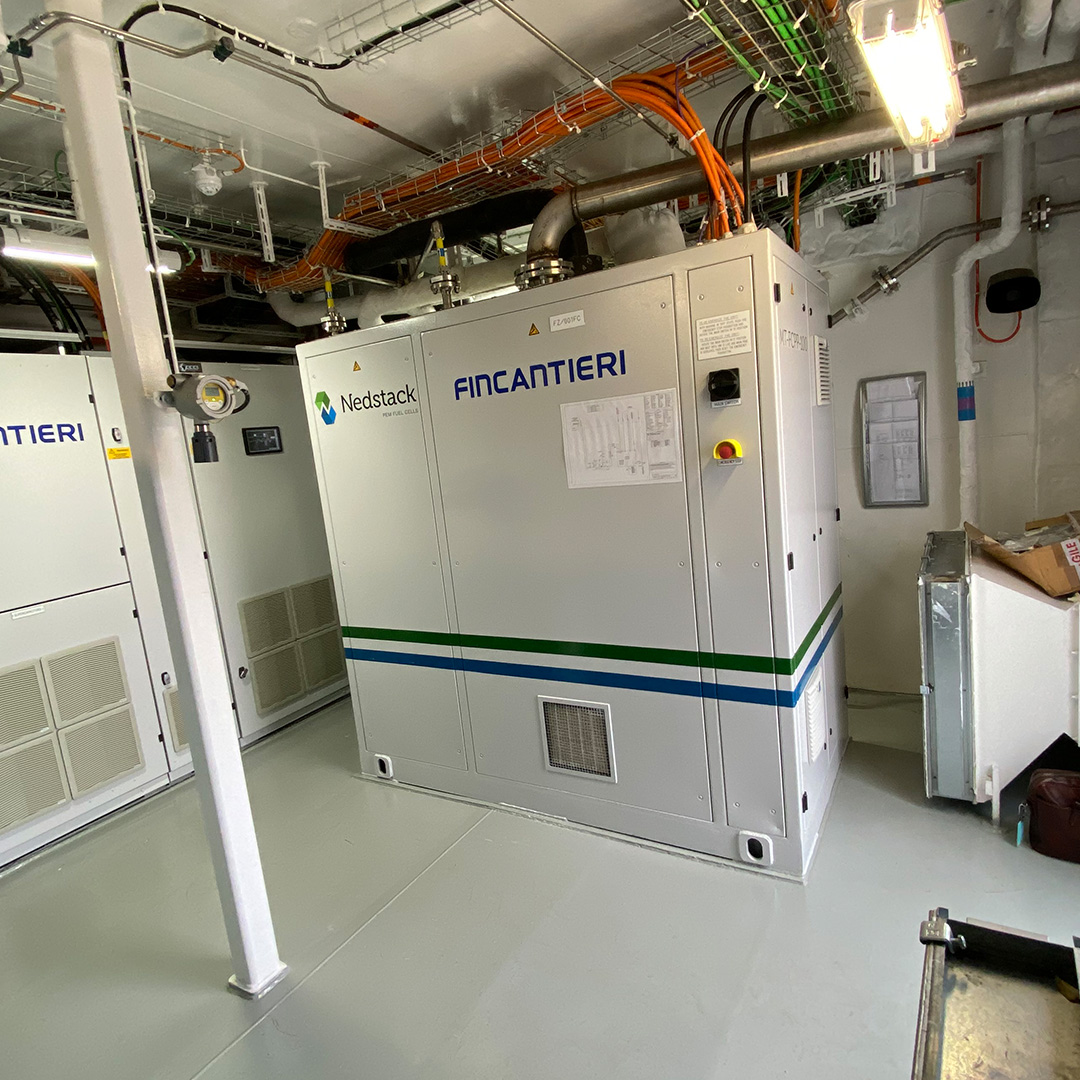
When Fincantieri and Viking wanted to know how hydrogen could work at that scale, they did not start with megawatts. They started with one PEM fuel cell, on a ship in regular service.
That fuel cell was a Nedstack.
By 2020, Nedstack fuel cells had already carried passengers on an Amsterdam canal boat. A sea-going cruise ship was a different problem. Hydrogen had to share a hull with hundreds of cabins, while the rules for hydrogen on cruise ships were still being developed.
Fincantieri said as much when it delivered the ship: the installation mattered for the technology, and for the regulations on hydrogen use on board. The test had to produce both engineering answers and evidence for the rulebook.
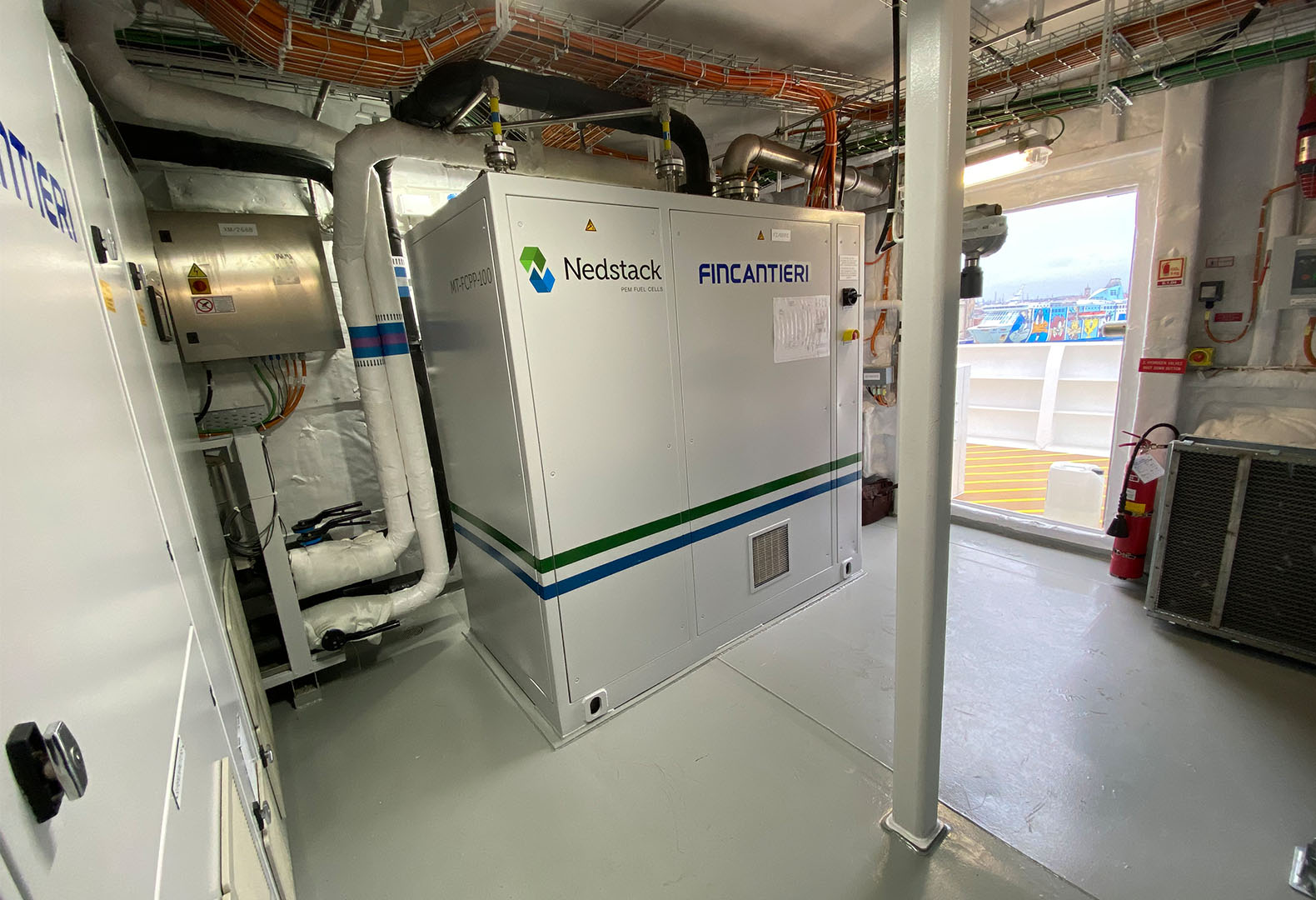
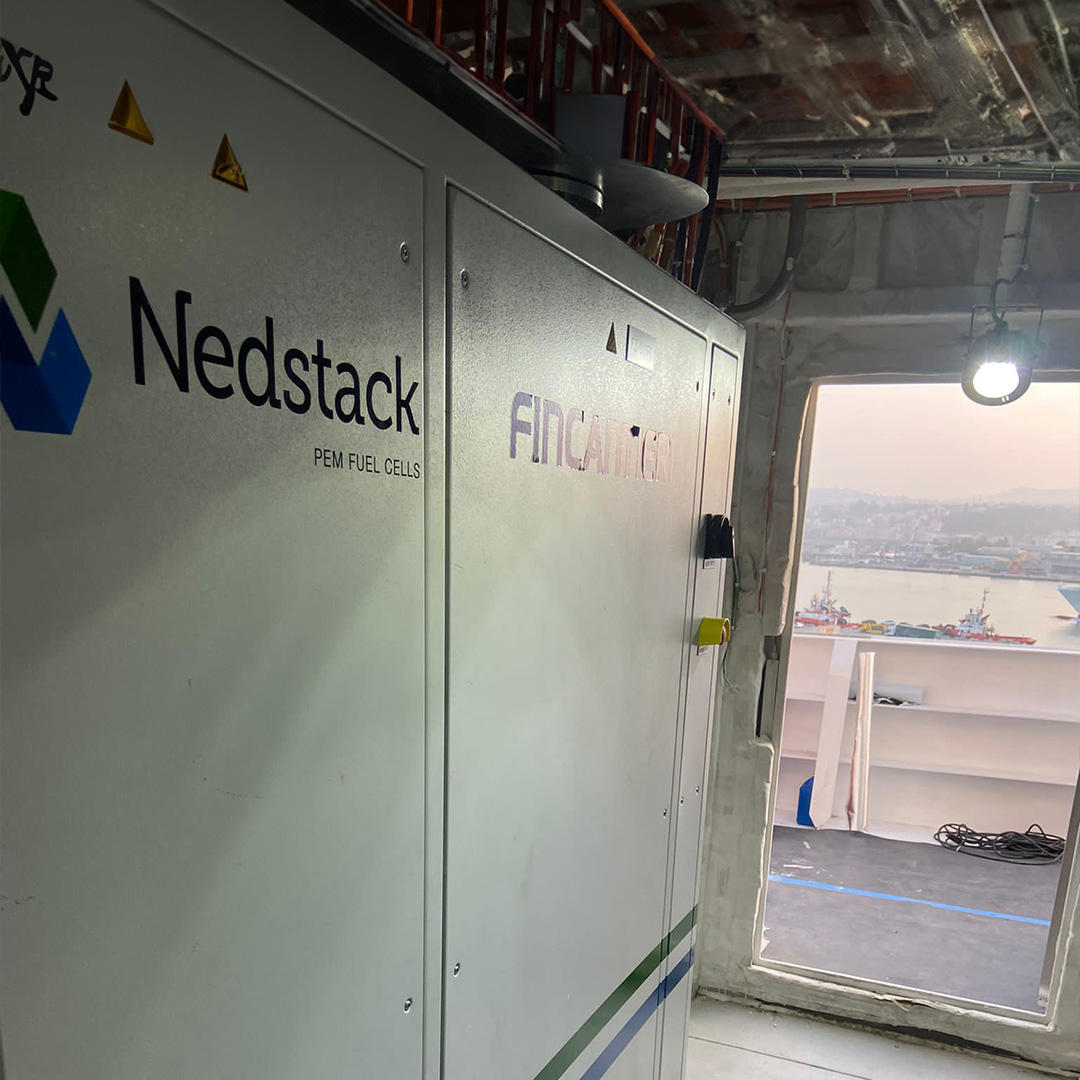
A fuel cell on a cruise ship sits inside a hull full of people. The installation had to work with the ship's ventilation and hazardous-area design, with gas detection around the hydrogen system.
100 kW next to 23,520 kW of installed power is not about replacing the generators. The unit fed DC power into the ship's electrical architecture and had to answer to the vessel's energy management system, running in parallel with the diesel generators. That is the interface any larger plant will need to get right.
Start-up, shut-down and purging followed class-approved procedures. On a passenger ship, hydrogen safety was an engineering deliverable, approved by class, not a talking point.
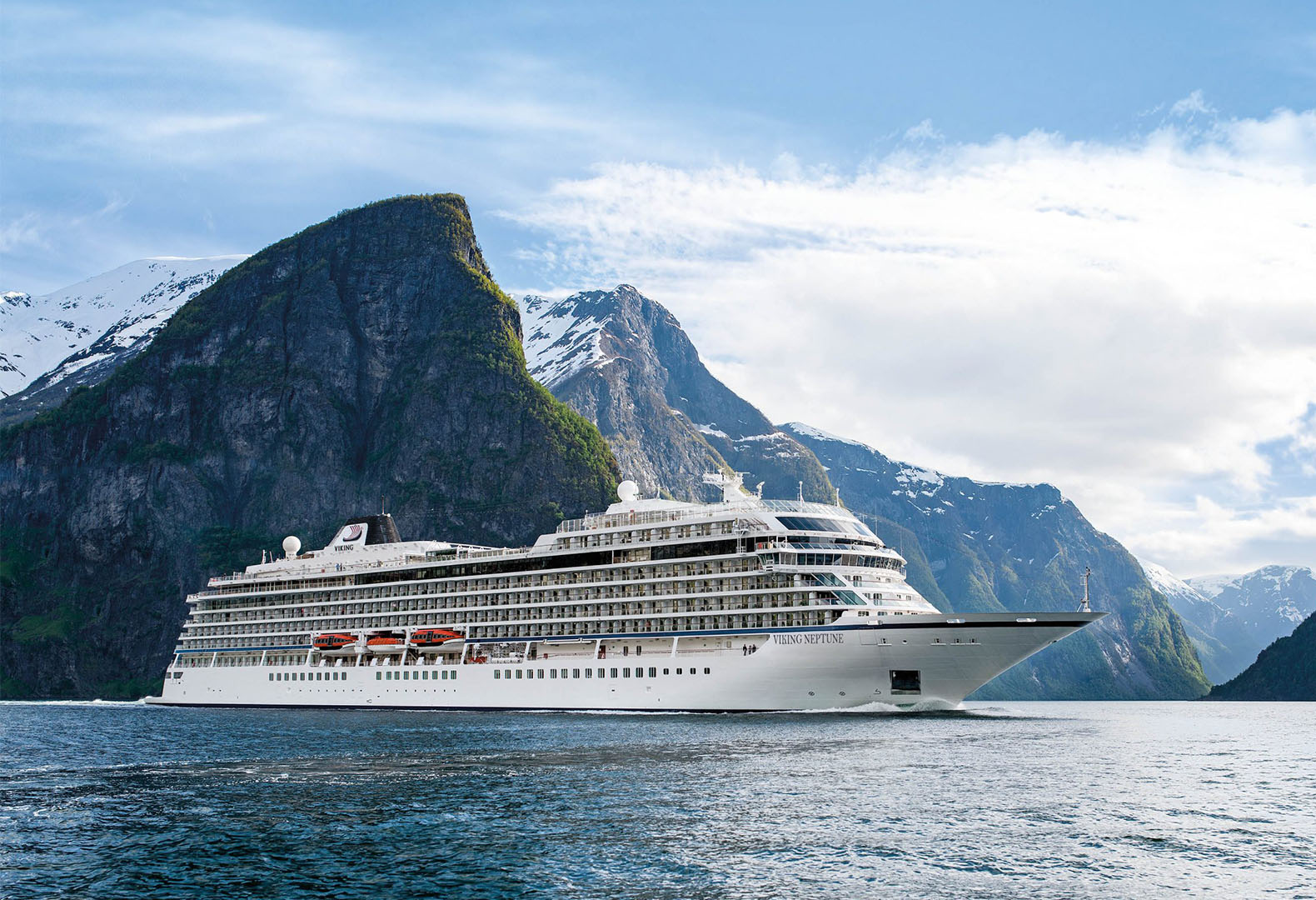
Viking Neptune moved hydrogen from a test bench into the procedures of a sea-going passenger ship. Fincantieri's next step was already defined at delivery: a hydrogen system of around 6 to 7 MW, in a ship configuration with room for larger tanks and fuel cells.
For Nedstack it was one step in a maritime line. In 2010, two 35 kW Nedstack systems powered the DNV-approved Lovers passenger vessel in Amsterdam. After Neptune came 300 kW on the inland cargo vessel Antonie and 900 kW on an inland vessel between Antwerp and Rotterdam, both from 2023.
That is still the standard we design to: power that keeps going, because the people on board can't stop.
Contact us today, and your hydrogen project begins.